Take two ingredients: a camera and a van. Combine them. Multiply the whole thing by seven rivers (the etymology of the word ‘Cévennes’, referring to the seven rivers that flow through the region). And off you go on an unforgettable adventure! At the wheel of your van, you’ll travel from one photo spot to the next, on the lookout for the best light and the most breathtaking views. You’ll come across castles and canyons, stars and dinosaurs. No, you’re not dreaming. Along the often winding (but always stunning!) roads, the Cévennes truly do have all these surprises in store for you! To discover them, all you need to do is take your time. Keep your eyes peeled. And, why not, flick through the story that follows.
- 60 €
- Average budget
- 7 days
- average roaming
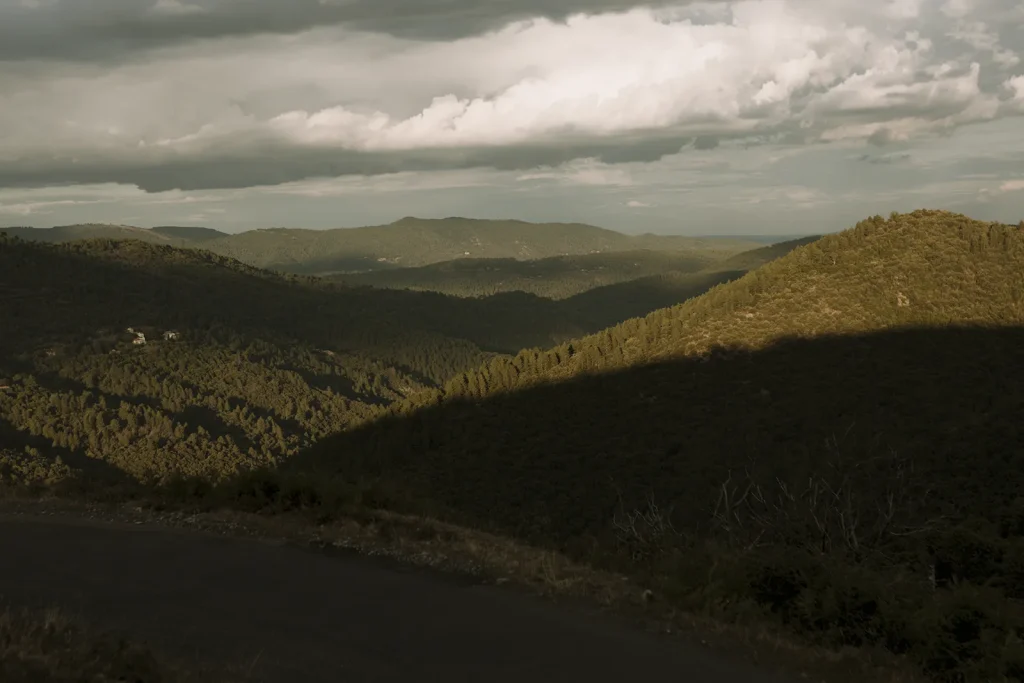
Spot 1: On the Cévennes coastal road
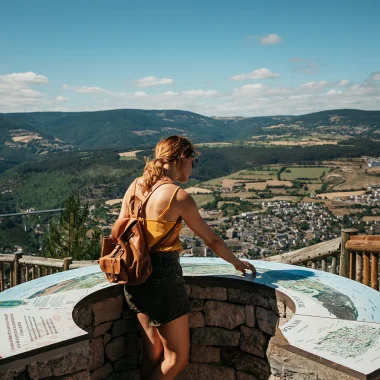
For once, we’re kicking off our getaway with a delicious meal. Right in the heart of the Corniche des Cévennes, the famous road that runs along the southern edge of Lozère, ‘La Patache’ welcomes us onto its terrace in Saint-Roman-de-Tousque. And what a view!
At our feet, the Cévennes valleys stretch out endlessly, in a rich palette of blues and greens. It doesn’t take long for our SD card to fill up with its first ‘made in Cévennes’ snaps! With our eyes still lost on the horizon, we treat ourselves to a porcini mushroom gratin and braised wild boar with chestnuts. There’s no doubt about it – our vantrip is off to a flying start!
Spot 2: In the Cévennes Dark Sky Reserve
Continuing north along the Corniche des Cévennes, we come across a small sign in Saint-Laurent-de-Trèves pointing to dinosaur footprints. Our curiosity prompts us to stop there. A short walk later, we’re there. It’s hard to imagine that a Grallator once walked here. A magical place that transports us straight back to the Jurassic period!
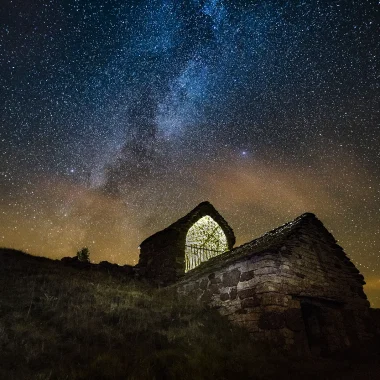
“It’s even more magical at night,” a villager tells us. And we’re happy to believe him! After all, one of the reasons we’ve come to the Cévennes is that the region boasts one of the clearest night skies in France. This is confirmed some twenty kilometres further on, as night falls at La Cham des Bondons.
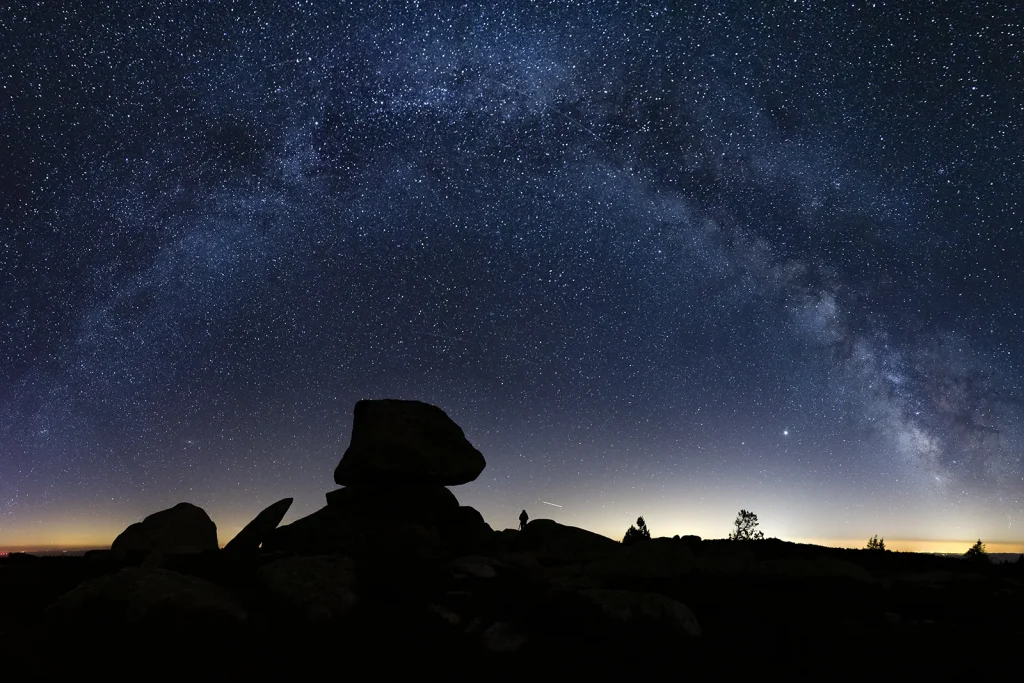
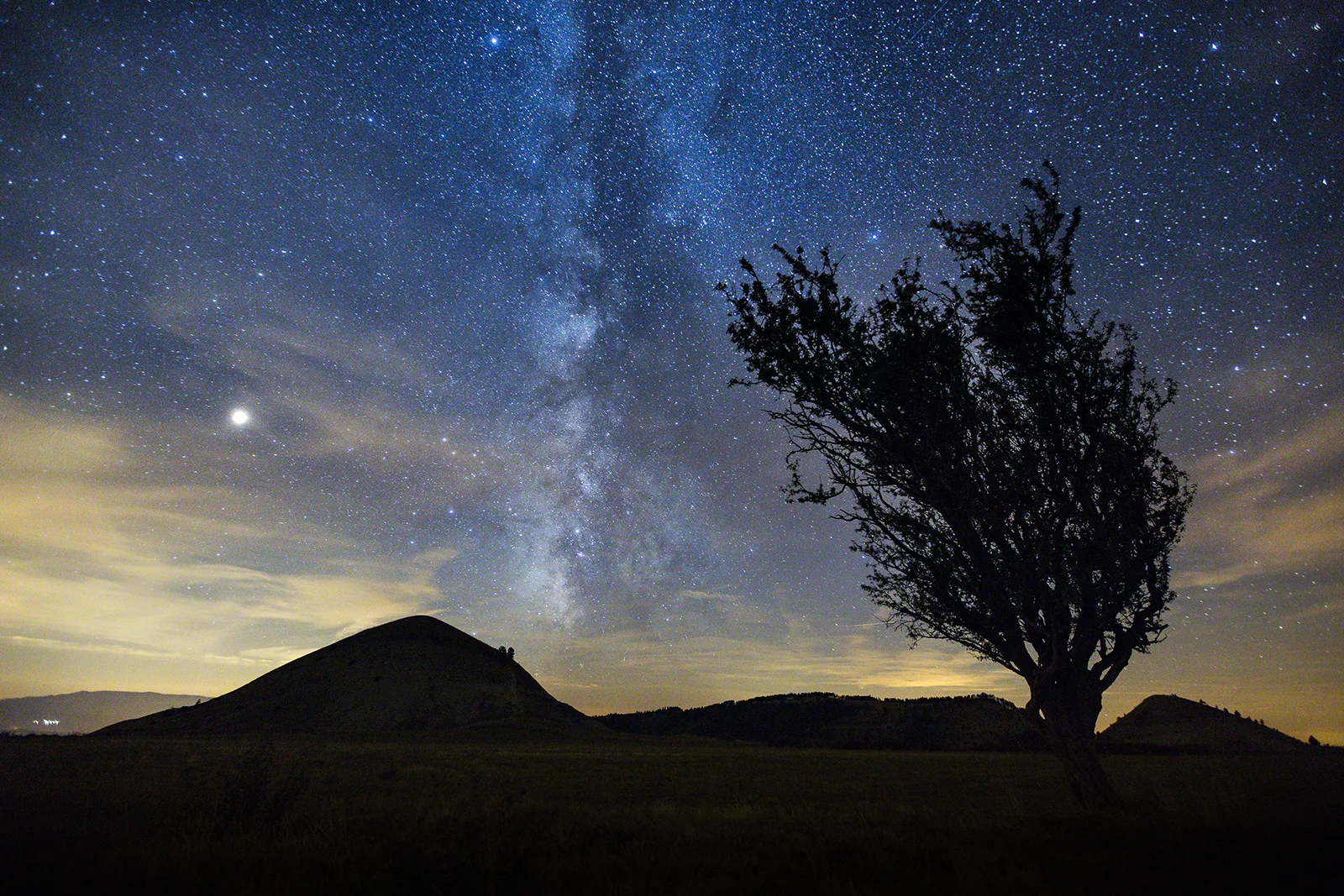
Surrounded by standing stones, facing two strange (but no less photogenic!) hills which, according to legend, are attributed to Gargantua, the sky gradually becomes adorned with millions of twinkling points of light.
With a long exposure, the stars trace a multitude of luminous circles. We take a series of time-lapse shots before lying down on the grass to admire the constellations and the dozens of shooting stars. Mesmerised, we return to the cosy warmth of our van and set off for the hamlet of Finiels. With our eyes still full of stars, sleep quickly overtakes us…

Did you know?
La Cham des Bondons is home to the second-largest concentration of megaliths in France, after the Carnac site in Brittany. No fewer than 154 menhirs have been recorded!
Spot 3: around Lake Villefort
The great thing about a van is that you’re free to set your own schedule. Free to set off at 5.30 am to be the first to reach the most popular spots. As we wind our way along the ridges of Mont-Lozère in the first light of dawn, we can’t resist the urge to photograph the montjoies – those standing stones that serve as landmarks for shepherds and walkers in misty weather.
But we mustn’t linger too long, as we’ve chosen another spot to whet our appetite for this new day: the Château de Castanet. Situated on the shores of Lake Villefort, it is artfully reflected in its waters. With a tripod and a wide-angle lens, our photos look as though they’re upside down, and it’s impossible to tell which is the castle and which is the water?!
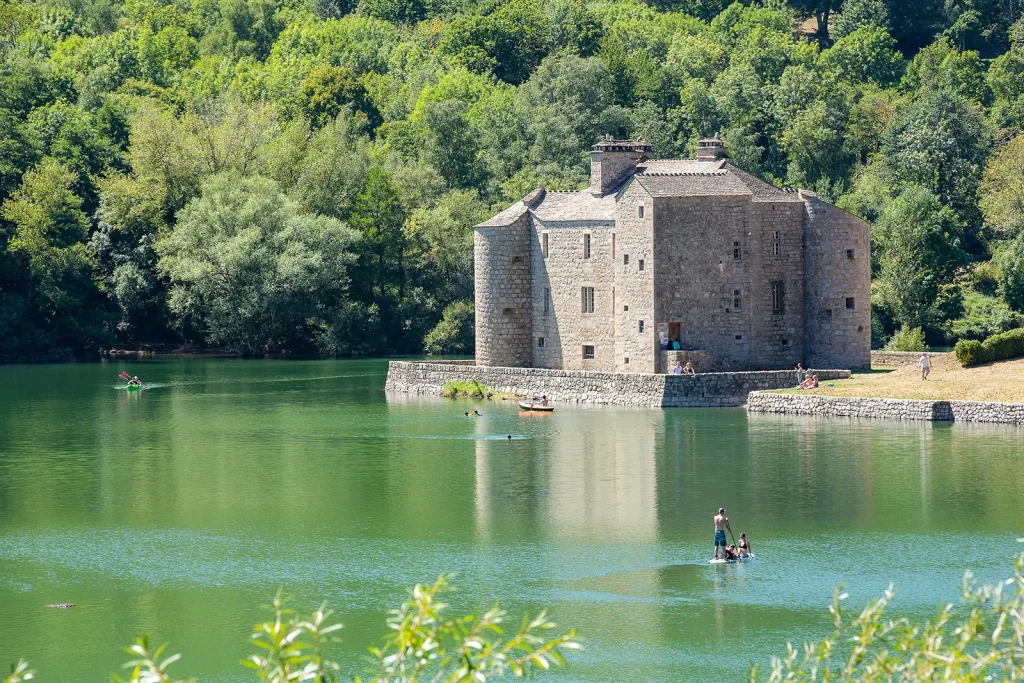
Lake Villefort has been awarded the ‘Blue Flag’ certification, a guarantee of crystal-clear water. All the more reason to treat yourself to a refreshing dip between photo shoots! And psst, you’ll come across plenty of other rivers perfect for a swim during your road trip, such as the Tarnon at Vébron or the Tarn at Pont-de-Montvert.
Retracing our steps a little, we then take a flurry of photos of the Château du Champ. With its six towers, it’s a truly imposing sight! The rest of the day is devoted entirely to Lake Villefort.
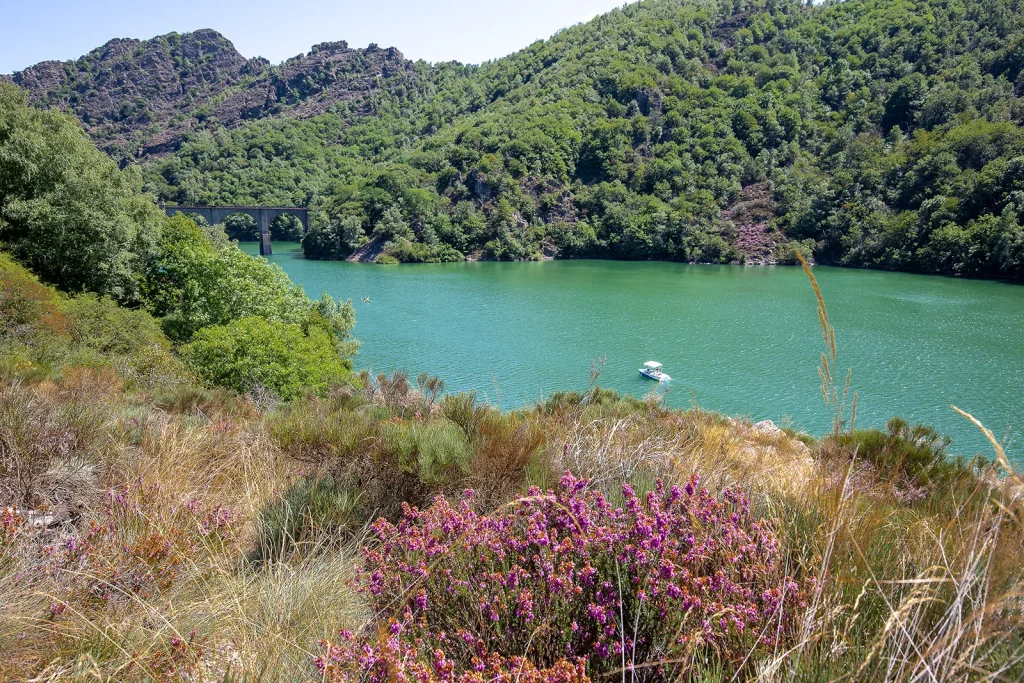
Winding its way through the landscape, it offers us a multitude of views: viaducts high above, the Saint-Loup chapel perched on its promontory, a white sandy beach… The hours slip by, and the golden hour sets in, enveloping the lake (and our photos!) in a soft golden glow.
Spot 4: In the ‘Most Beautiful Village’ of La Garde-Guérin
Unable to resist the temptation of a midnight swim, we wake up a bit later than the day before… But never mind, we’re in no rush. In fact, we take the time to cook a mountain of pancakes on our little camping stove. Eaten overlooking the lake, it’s the perfect breakfast! Then we set off again, and our vintage campervan continues to turn heads. It has to be said, our campervan looks the part! Its decidedly leisurely pace suits us down to the ground: it gives us plenty of time to take it all in. To stop and take a breather.
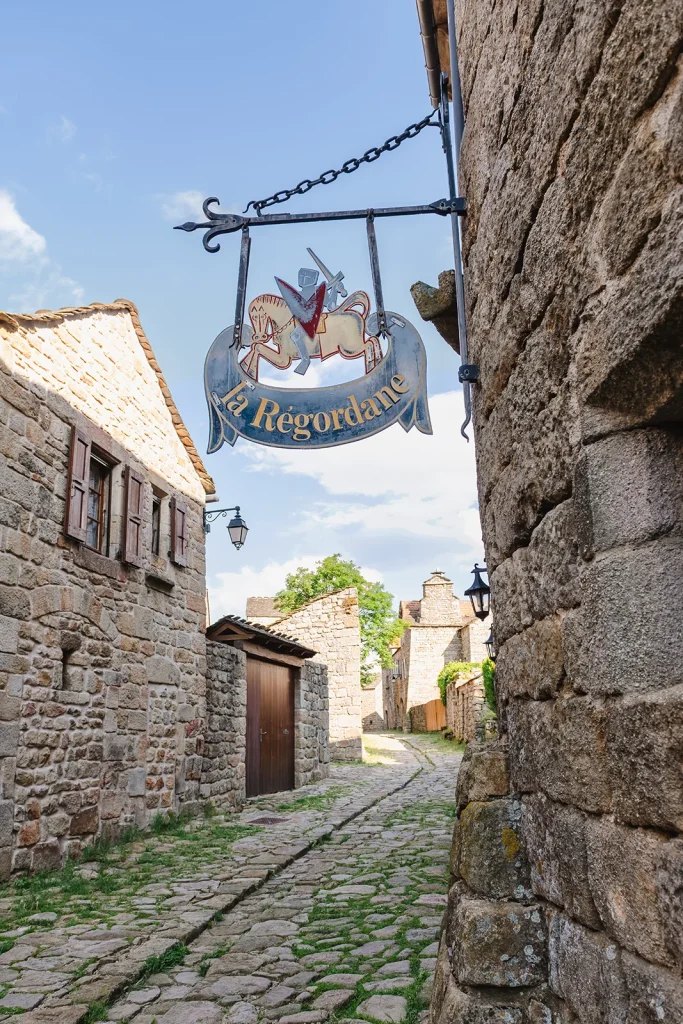
Take La Garde-Guérin, for example. The maze of medieval alleyways gives us a run for our money: we have to find the perfect angle and play with light and shadow. It’s a challenge we’re happy to take on, before climbing the 12th-century tower.
Towering 18 metres above the village, it offers a 360-degree panoramic view of the beautiful granite houses. But also, and above all, of the Chassezac Canyon, which is over 400 metres deep! It is at this dizzying vantage point that our road trip through the Cévennes comes to an end. Well, almost.
Plan your stay
Where to eat and stay?
Graded campsite

Service area

Hotels – restaurant

Hotel-restaurant

Craft industry


How do I get there?
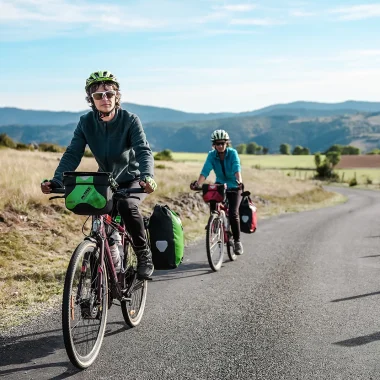
- A van is best! But of course, you can also do this photography road trip by car, or even by bike.
- To get to the starting point of the route, take the Corniche des Cévennes (the D9) from Saint-Jean-du-Gard. It takes about 25 minutes to drive to the restaurant ‘La Patache’ in Saint-Roman-de-Tousque.
- If you don’t have a van, you can hire one from WeVan, Black Sheep Van and Van-Away, which have branches in major cities across France (Toulouse, Montpellier, Lyon, Marseille, Paris, etc.). Alternatively, you could opt for peer-to-peer van hire via the Yescapa and Wikicampers websites!