Since 2018, the Cévennes National Park has been Europe’s largest International Dark Sky Reserve. But photographer Carole Reboul didn’t wait for this prestigious accolade to explore the region after dark and to gaze, through her lens, at the myriad stars! A solitary and mysterious experience, which she was kind enough to share with us. As an added bonus, she’s included a selection of her favourite spots and some tips for getting started with night-time photography.
The Cévennes by night
The Milky Way as a playground
“I have always been drawn to the ruggedness and beauty of the Cévennes. So it was only natural that I should start exploring them at night as well. The darkness enhances these landscapes; everything becomes implied, and our imagination takes over. I cherish those moments when you feel vulnerable, when you’re not in complete control.”
The ever-present sky and the stars remind us of how infinitely small we are on the scale of the Universe.
It naturally makes one reflect on the pace of our lives, on our priorities… Alone in the dark, one finds oneself dazzled by all the beauty one can just make out. It is an extraordinary experience to walk through a Cévennes forest at night. Here, perhaps more than anywhere else, the ghosts of history do not seem so far away.
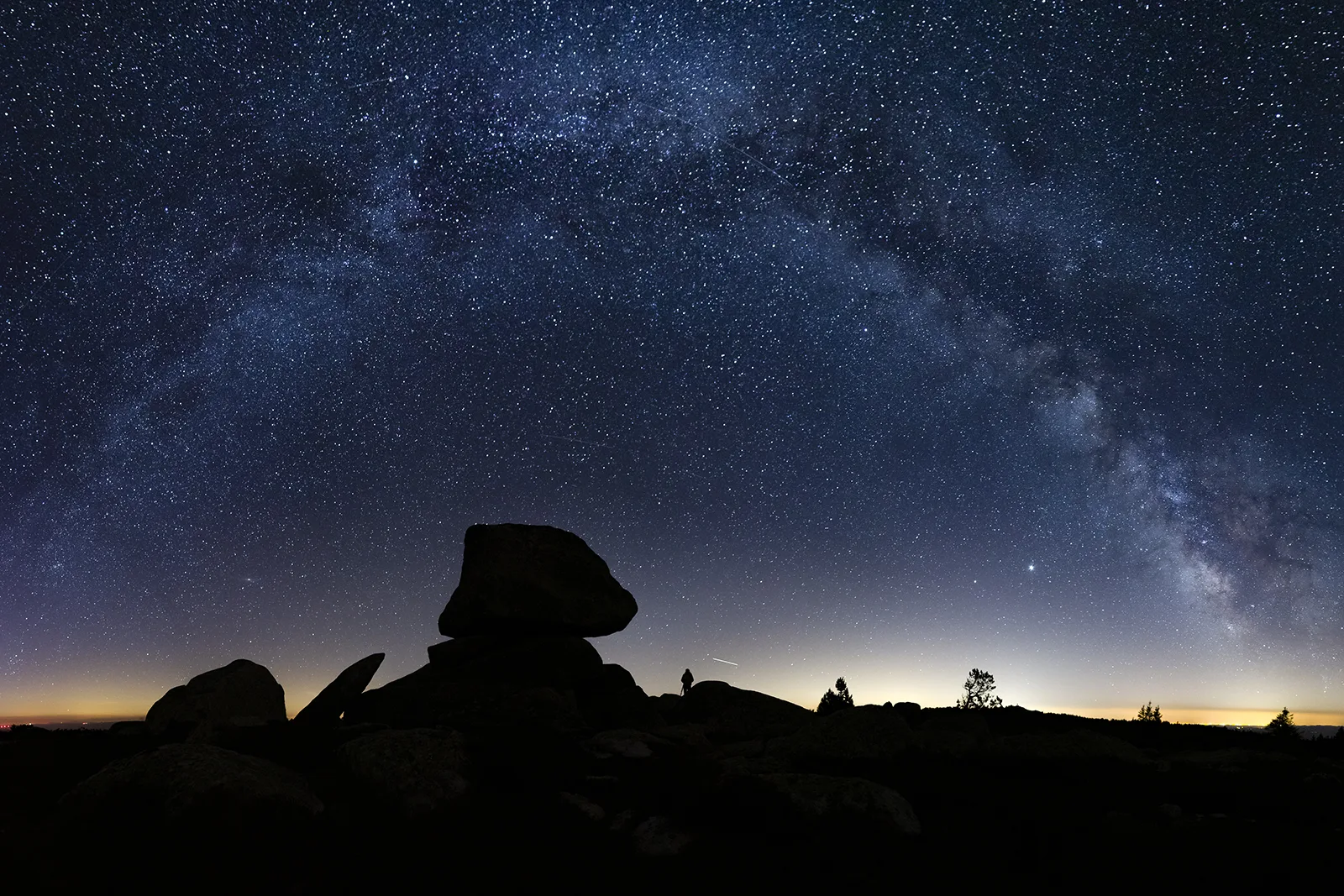
The Chaos of Nîmes-le-Vieux
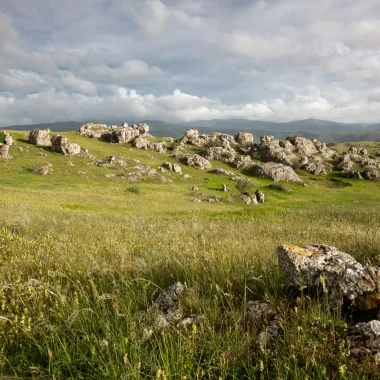
The Chaos de Nîmes-le-Vieux is undoubtedly one of my favourite places. This ruin-strewn site is full of dolomite rocks which, at night, take on a mysterious, evocative, even eerie appearance. It doesn’t take much imagination to see the heads of giants, animals, totems…
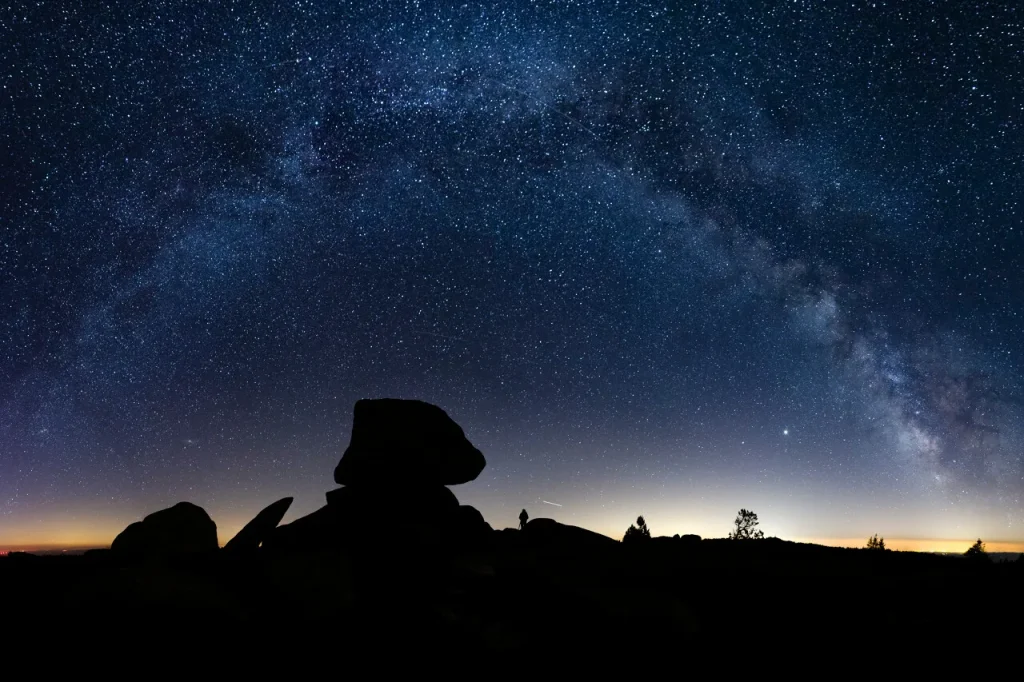
A live performance
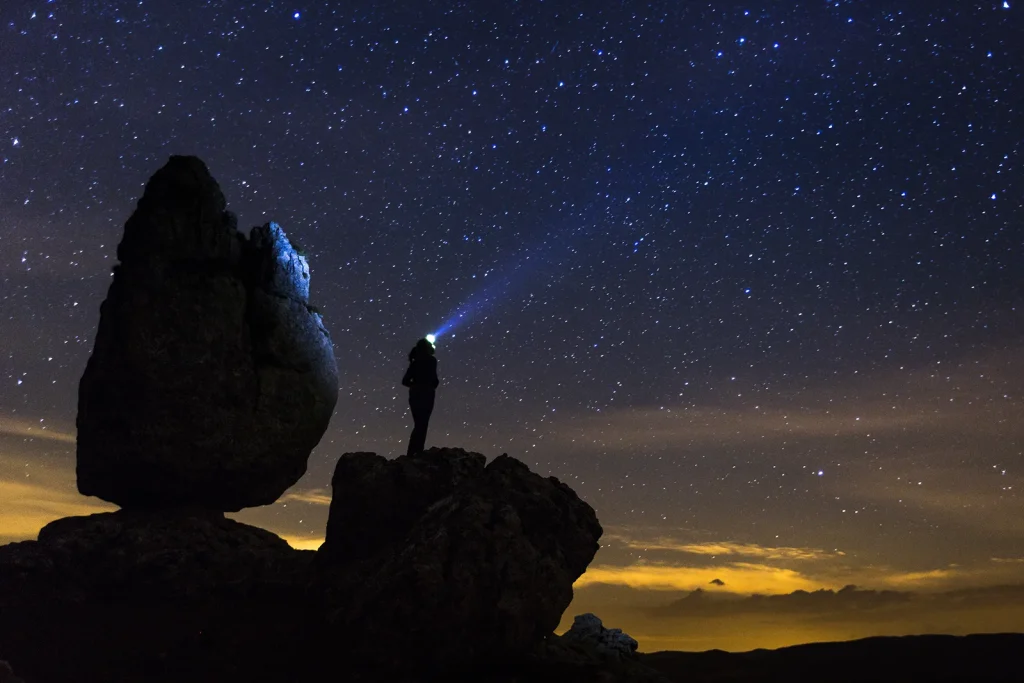
Beneath the Milky Way, it is easy to imagine a scene featuring one of these silhouettes, untroubled by the passage of time. As you round the bend, when the famous Sèvres Vase comes into view, it’s always a lovely surprise. Towering over the valley like a totem, this astonishing monolith stands out against a backdrop of stars and the lights of the valley.
Even more so at night, you realise that the landscape is not on a human scale: the cliff faces are dizzying, the rocks gigantic. And to think that this is where the vultures sleep – a common sight in this valley – only serves to reinforce that sense of smallness one might feel.” – Carole Reboul
Taking photos at night
Les conseils de Carole Reboul
- Going out at night requires careful preparation. It’s out of the question to set off on a night-time hike on Mont-Lozère if you don’t know the area well; it’s easy to get lost there. A recce during the day is essential. Also make sure to keep an eye on the weather, as it can change quickly in the Cévennes. Pack a rucksack with something to keep you warm, something to drink and eat, as well as a mobile phone.
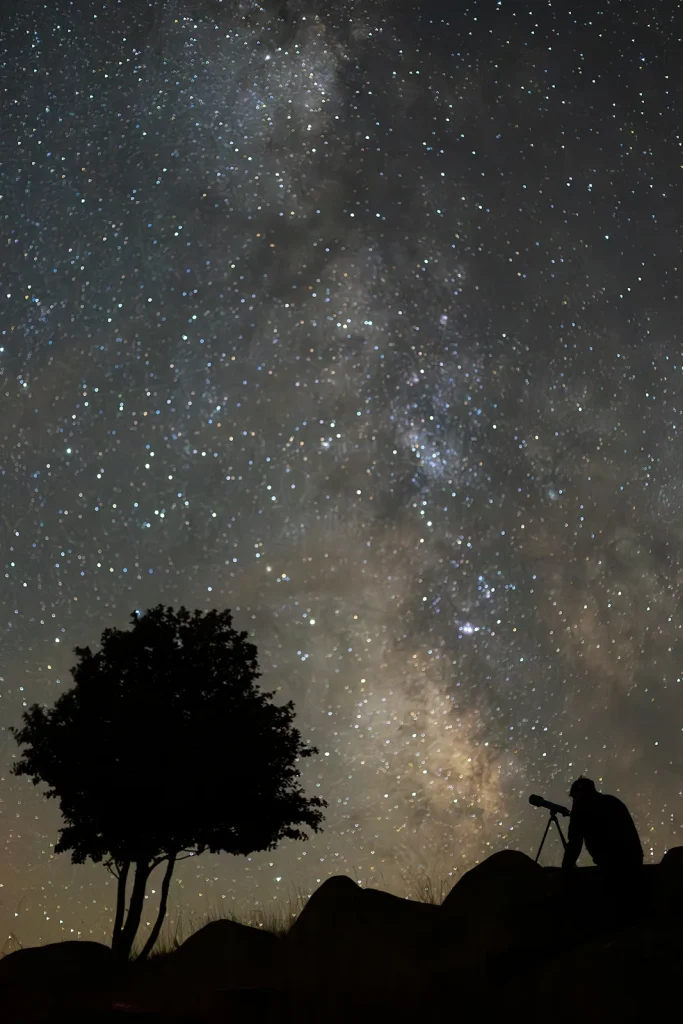
- Taking photos at night requires suitable equipment, due to the lack of light. You’ll therefore need a tripod and a camera with a manual mode. If you want to avoid the movement of the stars being visible in your photos, you’ll need to use a long exposure… but not too long (maximum 20 to 30 seconds).
Thematics