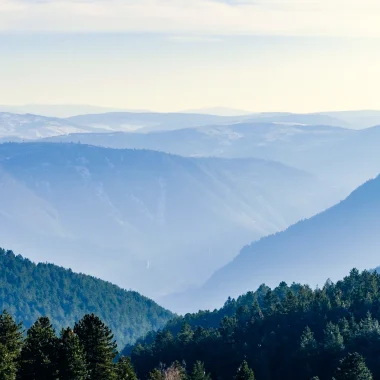
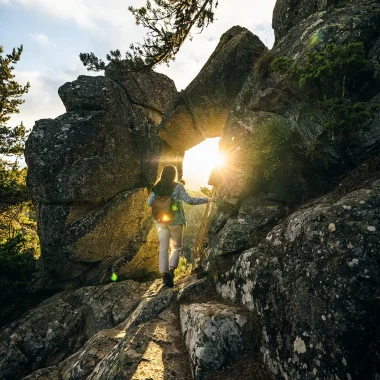
Gargantua was spotted in the Gorges du Tarn, at the summit of the Margeride and, of course, at La Cham des Bondons… Wherever Gargantua went, the Lozère took on his generous proportions. A short excursion in the footsteps of Rabelais’s giant.
The Legend of Gargantua
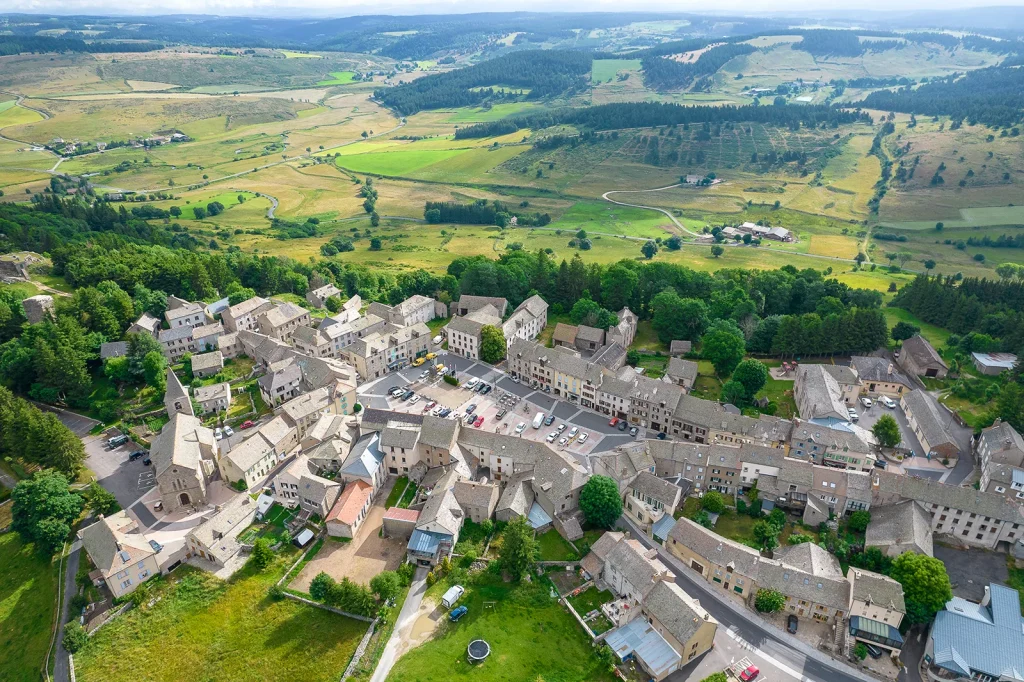
Spanning the Lozère region
Gargantua, François Rabelais’s second novel, written in 1534, recounts the formative years and military exploits of the famous gluttonous giant, an unmistakable Gallic icon. During his many adventures, Gargantua was seen in every corner of France. The legacy of his legend can still be glimpsed today in local legends and French place-names. In Lozère, the Rabelaisian hero has left a lasting mark on the landscape.
The giant’s strides were sometimes several kilometres long: near Châteauneuf-de-Randon, keen walkers will find his left shoe, whilst his right clog can be spotted at the summit of the Signal de Randon, considered one of the highest points in the Margeride.
Whilst still in the department, Gargantua enjoyed playing a game of discus with the young shepherds. You’ll find his stray discs at Le Méjean, as well as south of Langogne.
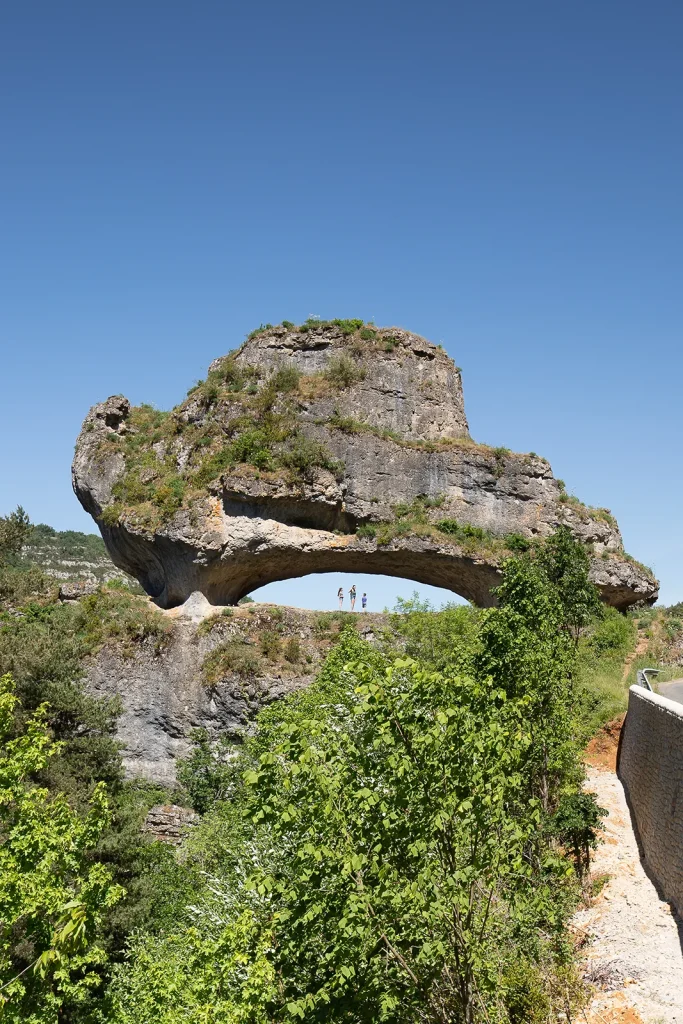
Gargantua’s visit
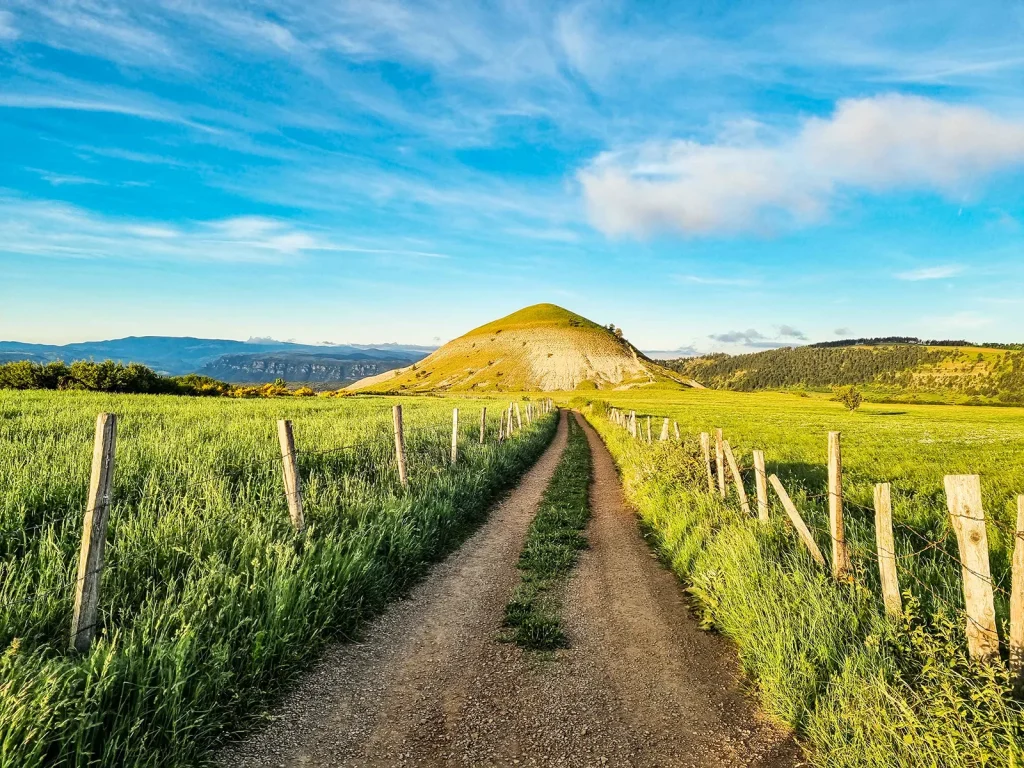
At Mont-Lozère
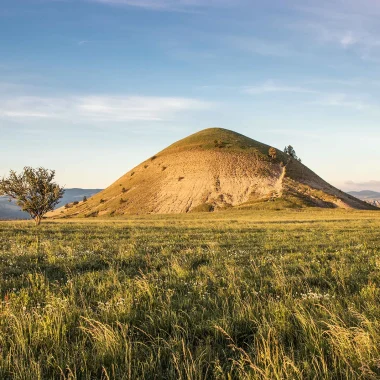
In Lozère, Gargantua’s geological legacy is still steeped in many other myths. One of the most notable is said to have taken place at La Cham des Bondons, south-east of Mont-Lozère. As well as its 154 granite menhirs, the site features two black marl mounds, which have surprisingly withstood erosion thanks to a layer of dolomitic limestone. Often described as the two ‘mounds of Lozère’, these puechs (from the Latin podium, meaning ‘raised ground’) are also said to be the giant’s handiwork. Returning from ploughing, Gargantua is said to have twice shaken his heavy, mud-encrusted clogs, thereby fertilising patches of granite soil. Until 1810, the two Puechs were known as the Puech d’Allègre and the Puech de Mariette. Today, they are called the Truc de Miret and the Truc des Bondons. Gargantua’s creative power, a singular Rabelaisian vision, a superb geological defiance… The slope of the Bondons conceals a spectacular landscape, at the junction of Mont-Lozère and the Grand Causse de Sauveterre.
Thematics