The tale of ‘Little Red Riding Hood’ has captivated generations of children, but who would have imagined that, at the end of the 18th century, fiction would become reality? Who would have believed that a fearsome creature, known as the ‘Beast of Gévaudan’, would attack the inhabitants of a remote region of Gévaudan? Yet, between 1764 and 1767, more than a hundred victims and even more attacks were recorded across a vast area stretching from Lozère to Haute-Loire.
Was it a wolf? A wolf-dog? An animal trained to kill? Or perhaps a hyena? Even after 250 years, this mystery remains unsolved and continues to fuel debate and stories. Today, we invite you to explore the Gévaudan region and unravel the mystery: who or what was the Beast really? Join us on a fascinating adventure into the heart of a world that is both enigmatic and terrifying.
Getting started in Gévaudan
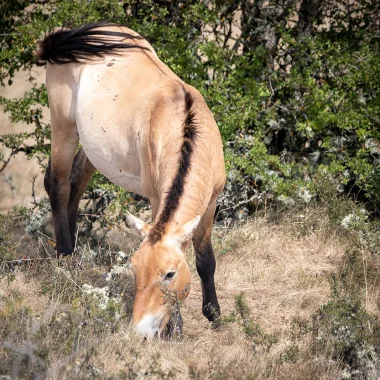
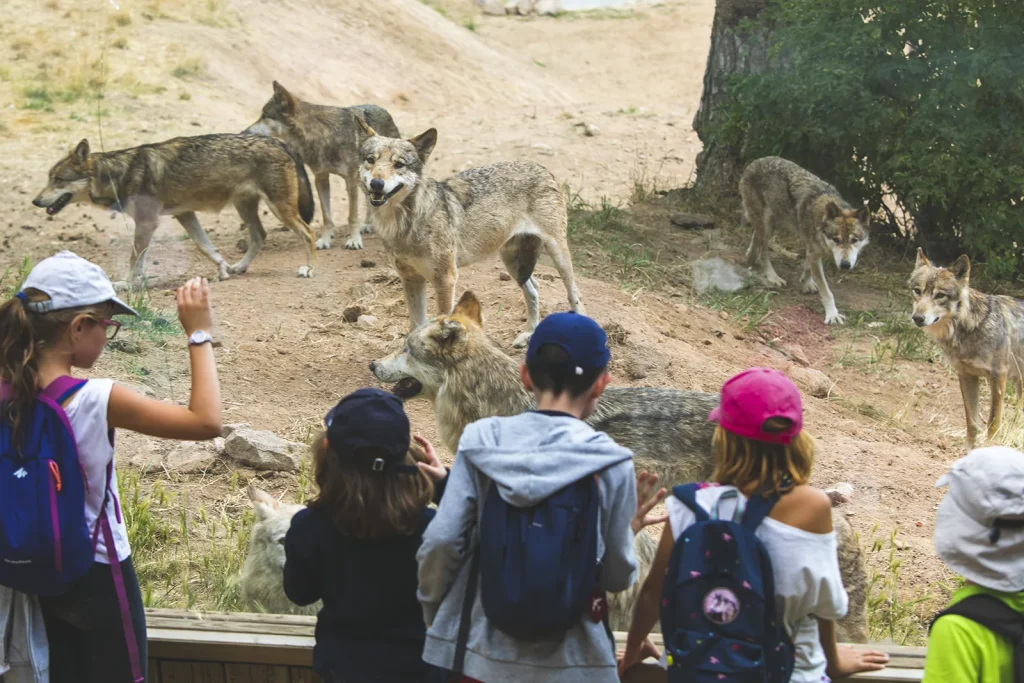
Our investigation begins a stone’s throw north of the village of Saint-Léger-de-Peyre. We are here on the border between Margeride and Aubrac, where the Beast of Gévaudan caused so much suffering and anxiety in the 18th century. Ironically, around a hundred wolves now live in this area. Their howls accompany our first steps in Lozère.
There’s no doubt about it: we’ve definitely arrived at the Gévaudan Wolf Park, Europe’s largest wolf reserve. Whether they come from Siberia or Mongolia, wolves bring back our childhood fears. Their sharp teeth have haunted our nightmares. And yet, as Audrey, our guide, tells us, there’s no reason to be afraid of them. In the days of the Beast of Gévaudan, 20,000 wolves roamed the forests of France, without ever attacking humans. Otherwise, do you really think the peasants would have let their 8- or 9-year-old children tend their flocks on their own? But then, if the wolf does not attack humans, what was the true nature of the Beast of Gévaudan? With one final blood-curdling howl, we continue our journey northwards.
Hunting the Beast Across Borders
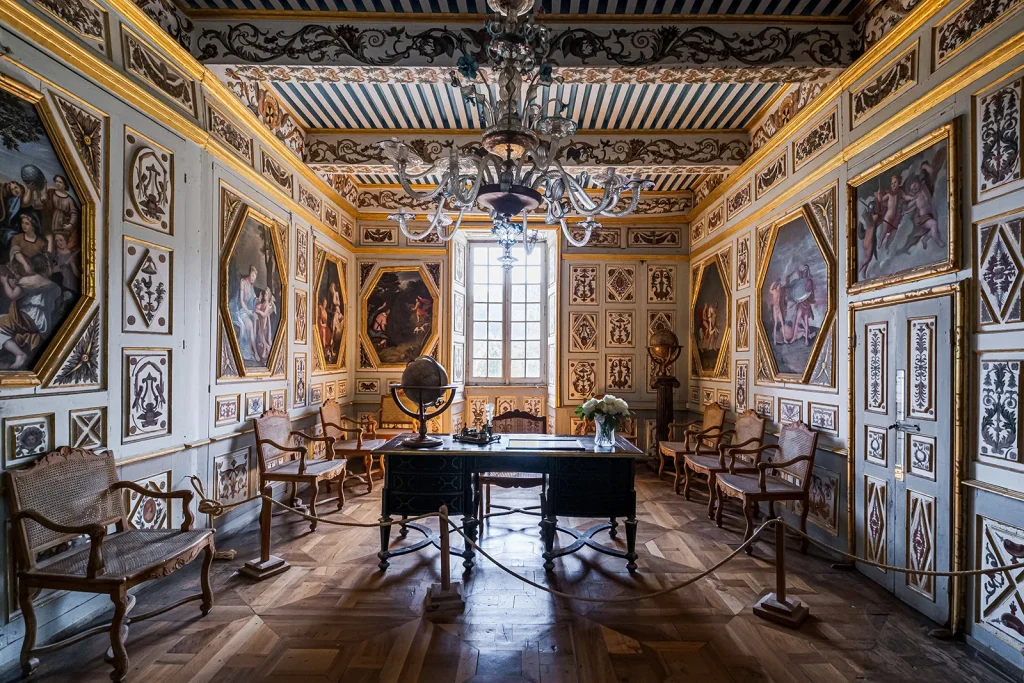
This time we’re due at the Château de la Baume, very close to Prinsuéjols. On arriving at what is known as the ‘little Versailles of Gévaudan’, we can’t help but be impressed by the massive granite building. Then we were struck by the striking contrast between the exterior and the interior: gone is the austere granite, replaced by wood panelling, paintings and other colourful adornments. It was as if we’d been whisked straight to Versailles!
But we must not let our guard down: the Beast could be lurking behind any tree on the estate, springing out at random to carry a child off to certain death. It is high time to take action. As the story has caused quite a stir all the way to the Court, the King’s wolf-hunter is sent to track down the Beast.
At the Château de la Baume, he found support from the local lord, whom he thanked for his help by presenting him with a rifle. This rifle is still on display on one of the castle’s walls. So too is a spear, which is said to have been used by a shepherd to defend himself against the Beast. Legend has it that blood still stains the tip of the weapon. What an atmosphere…
The Beast of Gévaudan, at the heart of the tale
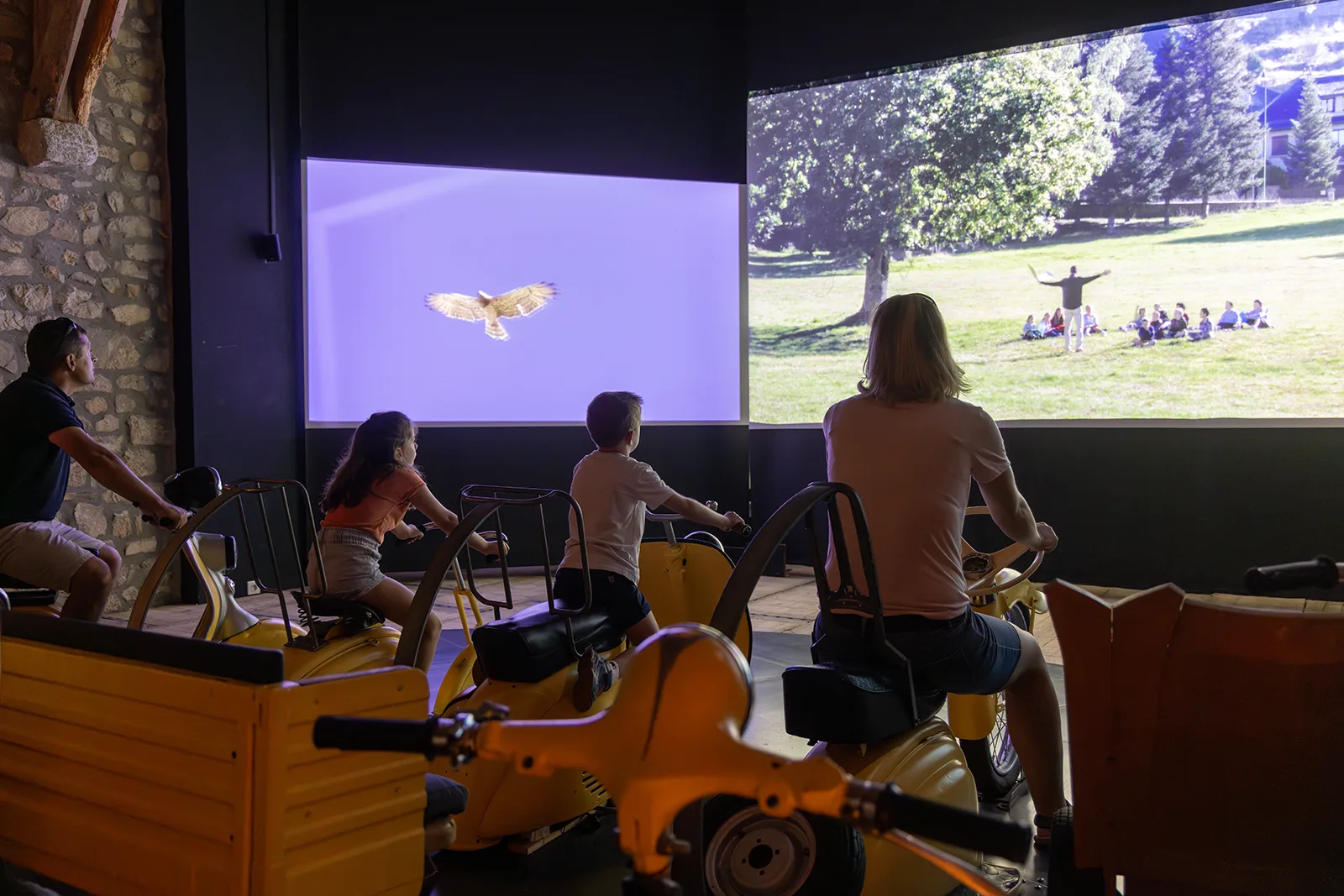
Back on the road, we leave the Aubrac behind for good and head for Saint-Alban-sur-Limagnole and its Scénovision. ‘La Margeride à la folie’ is the name of the show, a lively blend of cinema and theatre, with sound and lighting effects.
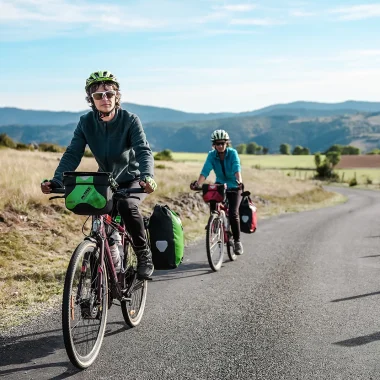
There we meet Auguste, a postman about to retire. Accompanied by him, we set off on a cycle tour through the hamlets of Margeride. Eager to share the secrets of his region, Auguste tells us about the Way of St James and the Resistance, psychotherapy… and the Beast of Gévaudan. A true local anti-hero.
Faced with the increasing number of attacks and the ever-growing list of victims, the Château de Saint-Alban became one of the gathering points for those involved in the hunt for the Beast. At their head was Jean-François-Charles de Molette, Count, military officer… and, incidentally, a suspect in the Beast case! Could he have trained a dog to attack innocent villagers? Whether zoologists or journalists, several investigators have reached this conclusion. As for us, the further our investigation progresses, the more the mystery seems to deepen.
How we saved the Gévaudan
Heading east, we venture dangerously deep into the territory of the Beast of Gévaudan. Just outside Saint-Denis-en-Margeride, we’re meeting Jean Chastel – the very man who killed a ‘beast’ in 1767, putting an end to the carnage. Now, you’re probably thinking that all it would take is to know the nature of this beast to solve a 250-year-old mystery… But here’s the thing: poorly stuffed, the beast arrived at Versailles in a pitiful state. And no one could determine what it actually was…
An evening in the (terrifying) Mercoire Forest
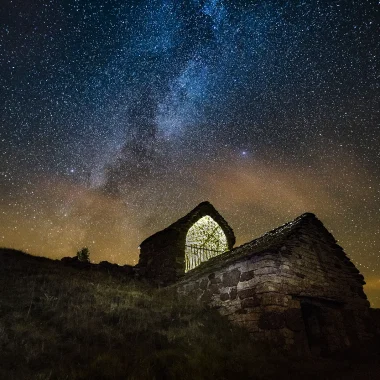
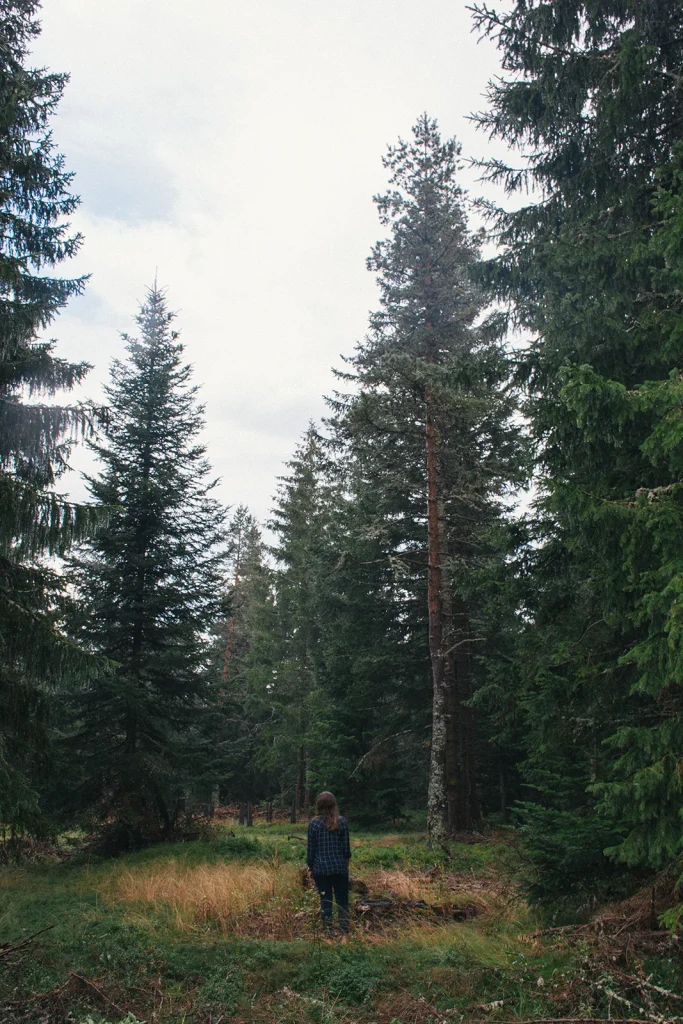
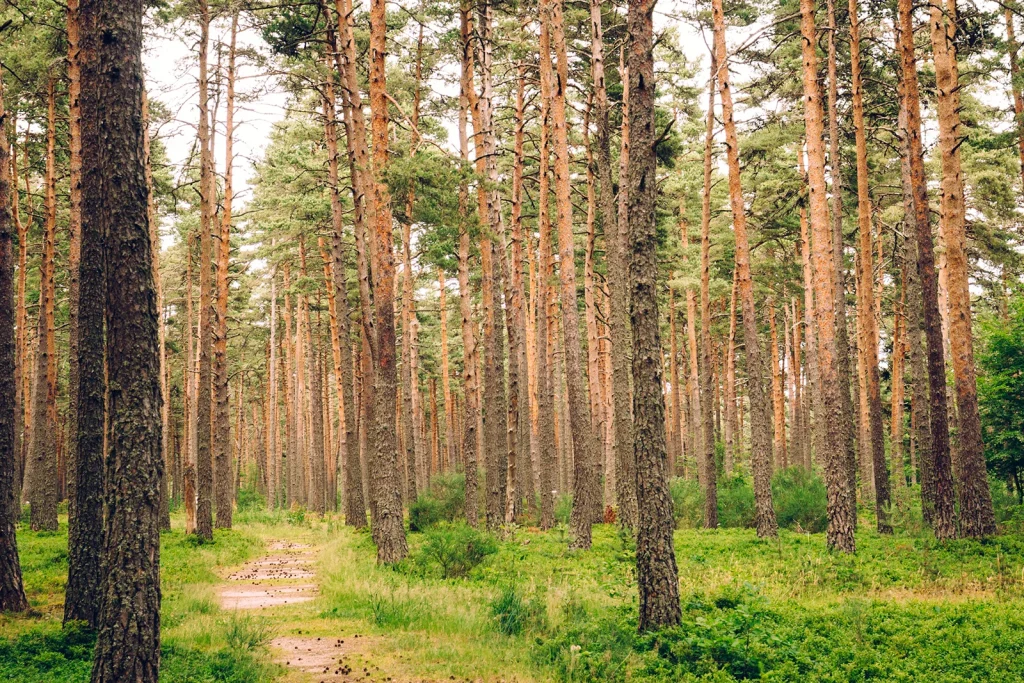
The epilogue to our adventures in Gévaudan is drawing near. But there is one last lead left for us to investigate: the Forest of Mercoire, where it all began. With our minds filled with tales of the Beast of Gévaudan, this usually peaceful forest takes on a completely different character. Dark. Mysterious. Terrifying. Yet it is here that we plan to venture for a night-time exploration.
By the light of our torches, every shadow becomes menacing. Every crack of a branch makes us jump. Every cry from a distant animal sends shivers down our spines. But, determined to see our investigation through to the end, we brush aside our fear and carry on. Further and further. Until the starlight can no longer pierce the canopy of trees. Then, we feel just like those 18th-century inhabitants. Helpless, but standing together. Together, we manage to make our way back to the edge of the woods. Safe and sound.
We may not have managed to unmask the Beast, but at least we’ve pushed our limits. That’s certainly worth a quick beer, isn’t it? Especially when that beer is called… ‘La Bèstia’!
Plan your stay
Where to eat, where to stay, what to do?
Discover all our top picks for a great holiday.

SCENOVISION, LA MARGERIDE A LA FOLIE !
Thematic museum

Escape game

How do I get there?
To ensure you can escape the Beast of Gévaudan should it suddenly spring from the undergrowth, we recommend you come by car! The Margeride and Aubrac regions are easily accessible via the A75 toll-free motorway. To get to the Gévaudan Wolf Park, you’ll need to take exit 37.