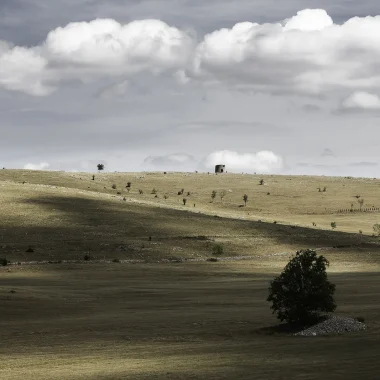
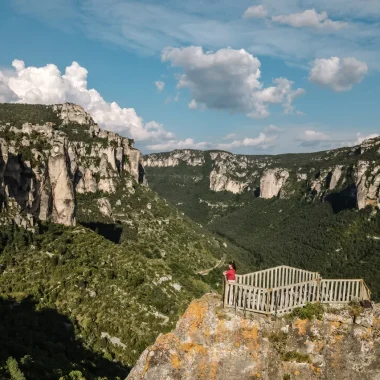
Situated in the north-west of Lozère, the Aubrac Regional Nature Park spans three departments, including Lozère. Its landscapes, local expertise, cultural heritage and environment make this rural, mid-mountain region a well-preserved area. Immerse yourself in the heart of the Aubrac and its unique features all year round.
Exploring the Aubrac Regional Nature Park
Transhumance: an agropastoral tradition that lives on
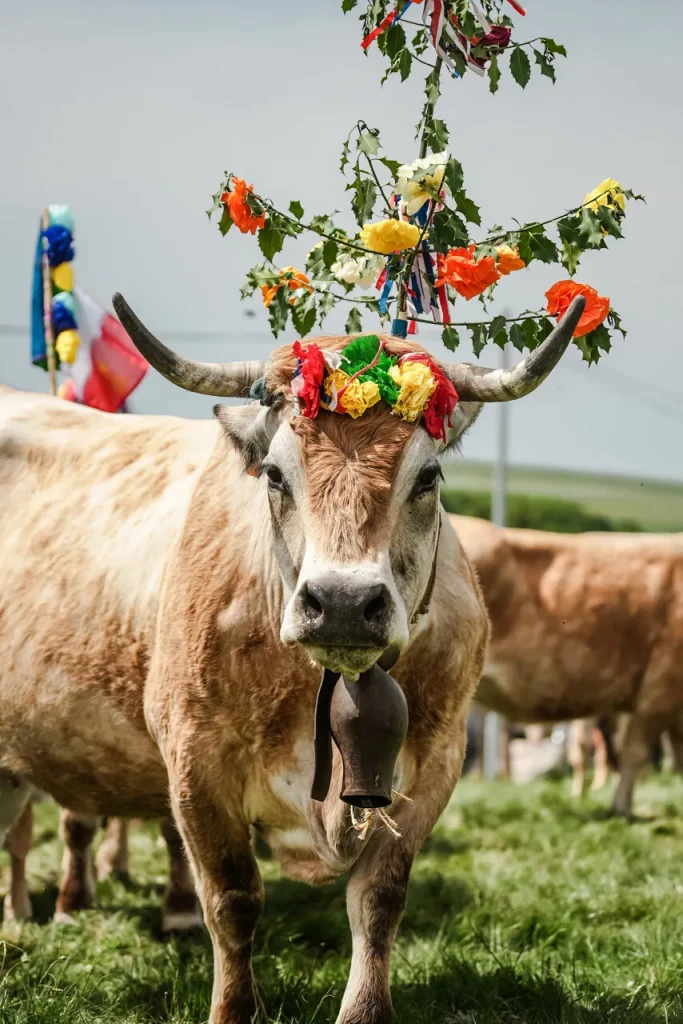
Every spring, the Aubrac welcomes new arrivals: whole herds of cows. It’s time for the transhumance: they come to graze on the plateau for the summer. Coming from the foothills of the Aubrac, the herds follow the ‘drailles’, the numerous transhumance trails. Transhumance is a celebration for the animals, but not only for them: at the Col de Bonnecombe, every year on the last weekend in May, the cows’ ascent to the plateau is celebrated. As well as the passage of thedecorated herds, all the traditions of the Aubrac are showcased on this occasion: from tasting delicious aligot to traditional folk dances in period costume, all your senses will be awakened.
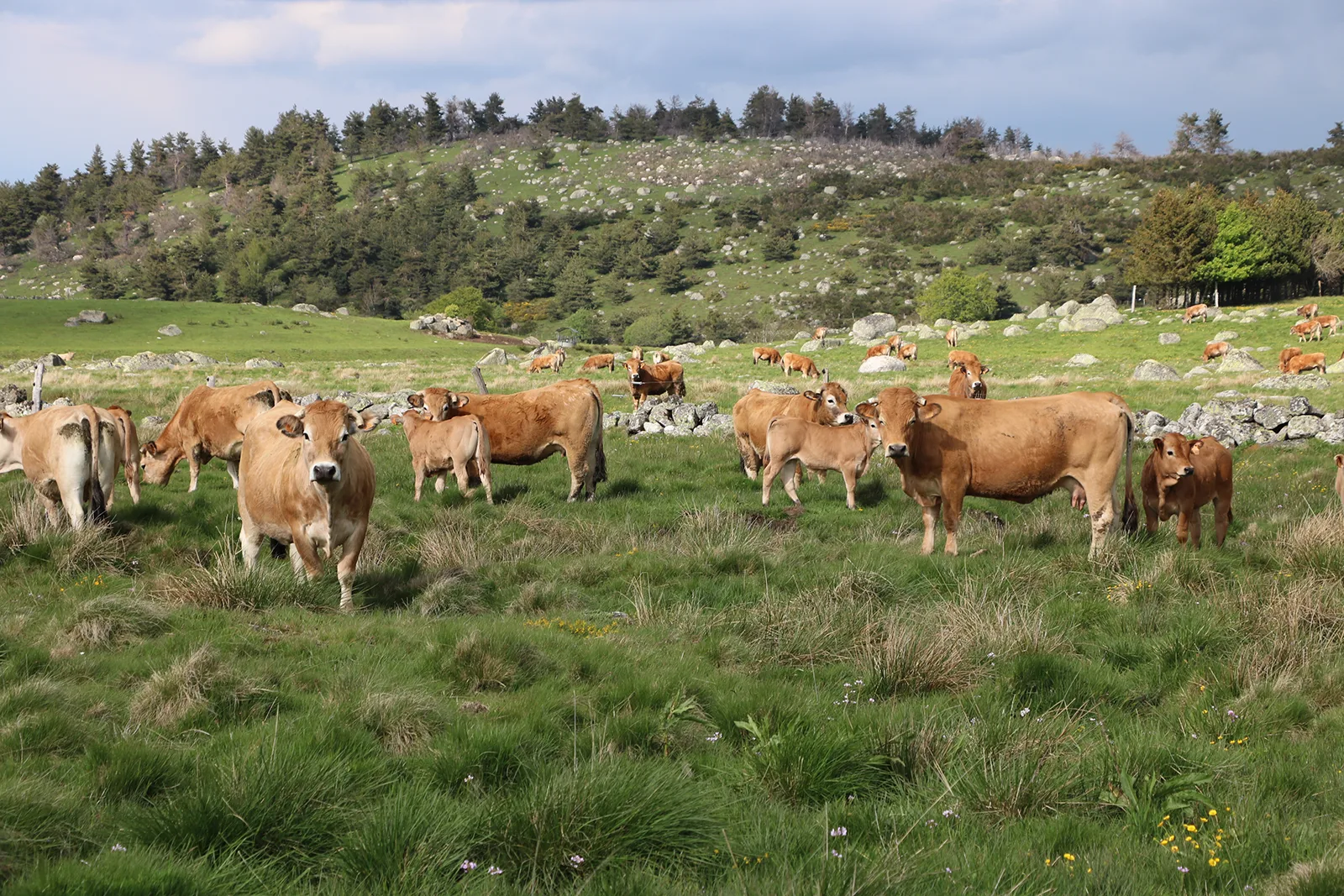
In the made-up eyes of the cows
Aubrac cows graze from May to October in the meadows of the plateau of the same name. This hardy breed, with its fawn coat, kohl-lined eyes and lyre-shaped horns, is perfectly adapted to the weather conditions found on the plateau. Their hardy nature and maternal instincts enable them to rear their young with ease. The herds form an integral part of the typical agropastoral landscape of the Aubrac.
The flora of the Aubrac: a garden of a thousand colours
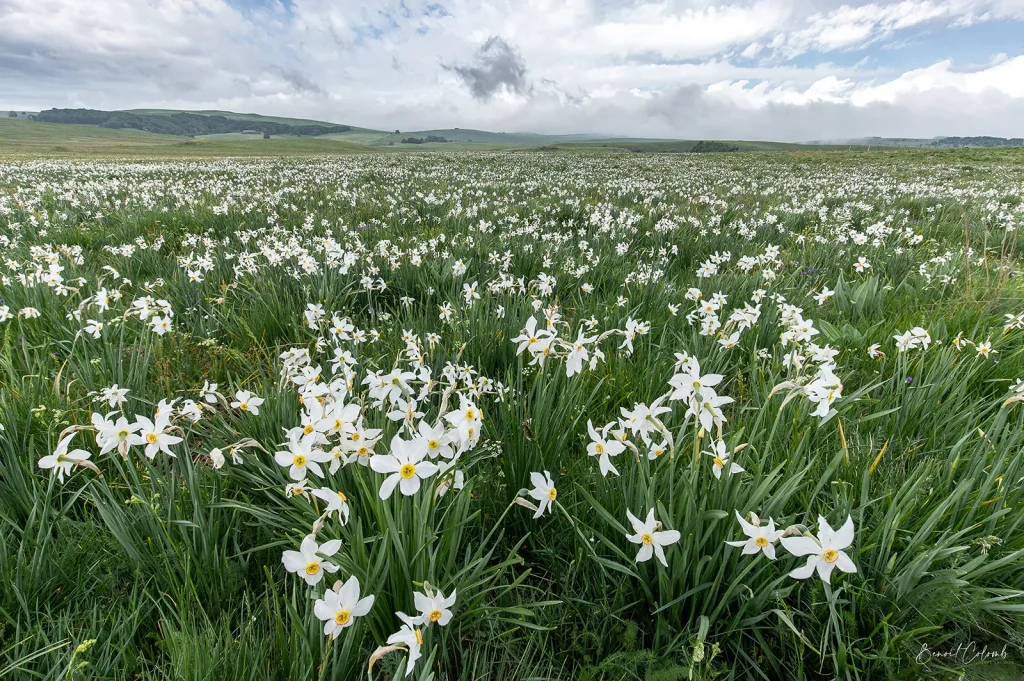
Livestock farming and the tradition of transhumance, which has continued since the Middle Ages, have prevented forests from taking over the land and have thus given way to an extraordinary diversity of flora: orchids, broom, tulips, crocuses… The star flowers of the Aubrac, however, remain the daffodils and narcissi, whose blooms in turn cover the plateau with a veil of yellow and white towards the end of spring.
Nature and Heritage
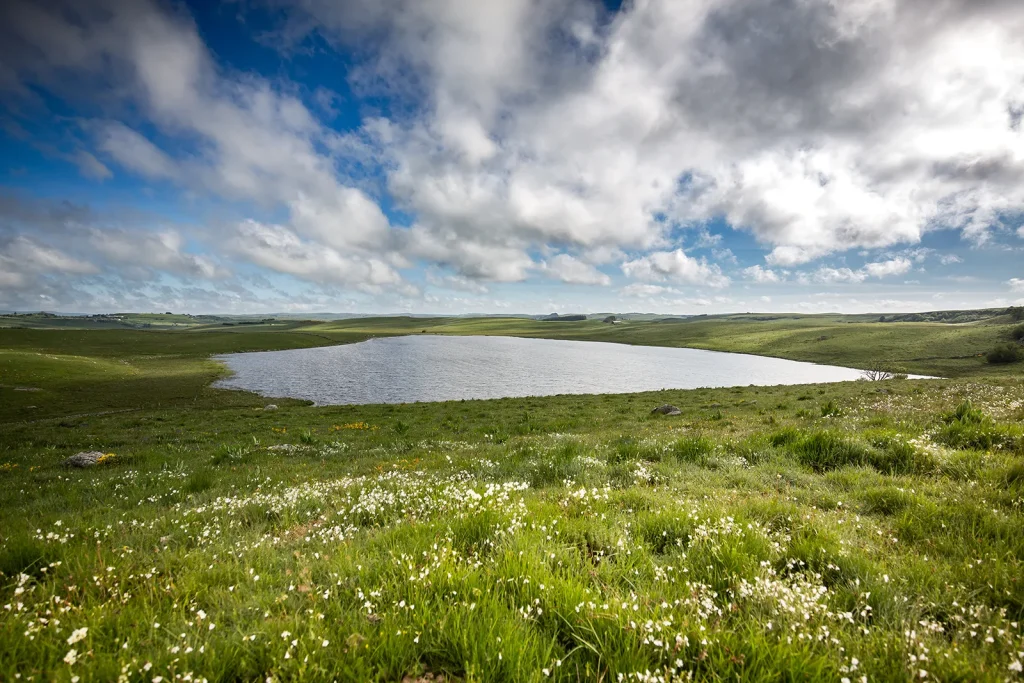
Glacial and river lakes
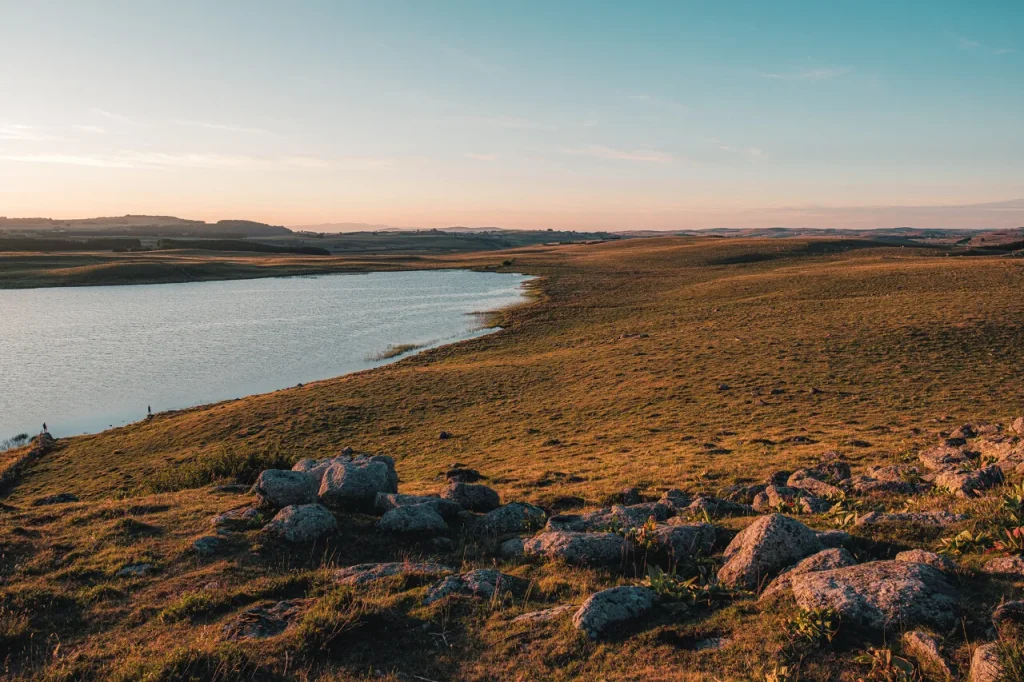
Despite its desert-like landscapes, the Aubrac region is a source of water. Travelling along the ‘Silver Route’, one comes across numerous lakes fed by glacial meltwater, crosses a multitude of streams and sees dozens of peat bogs. Indeed, it is the conservation of these wetlands and peat bogs that is being prioritised within the framework of Natura 2000 sites and nature reserves.

And cascading water
In the middle of this plateau, a lovely 30-metre-high waterfall appears out of nowhere… Do feel free to walk down to the foot of the waterfall – you might be in for a surprise!
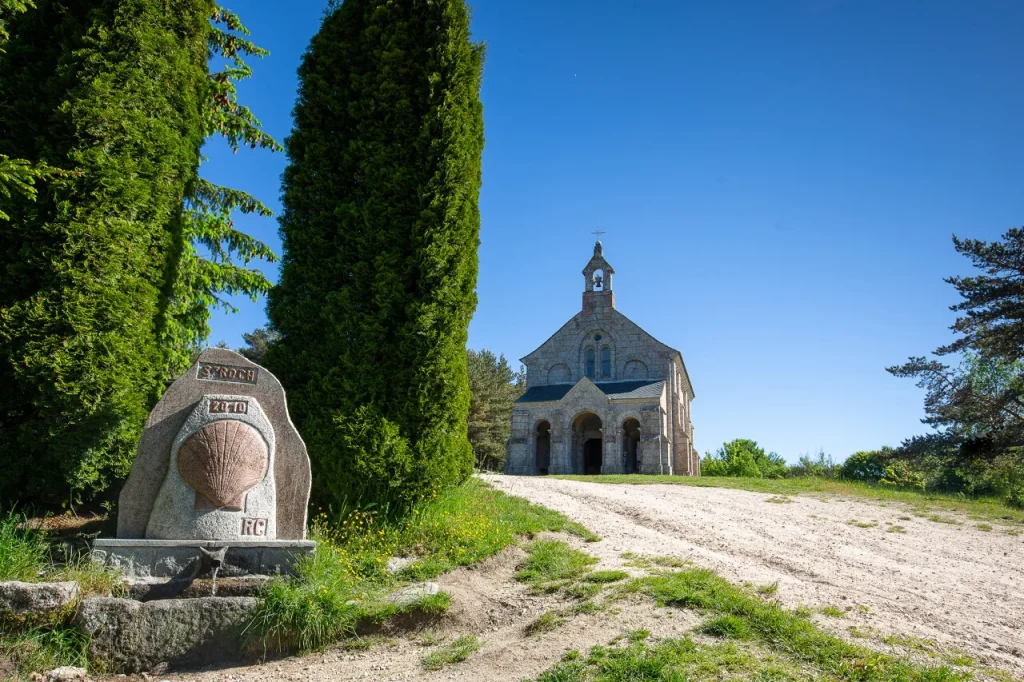
In the footsteps of the Camino de Santiago
The 750-kilometre-long Way of St James passes through the Aubrac. Every year, tens of thousands of pilgrims and walkers follow this route and (re)discover the unspoilt landscapes of the Aubrac. The section between Nasbinals and Estaing has been listed as a UNESCO World Heritage Site since 1998 for its unspoilt natural setting.
Alpine huts, churches, bridges and crosses
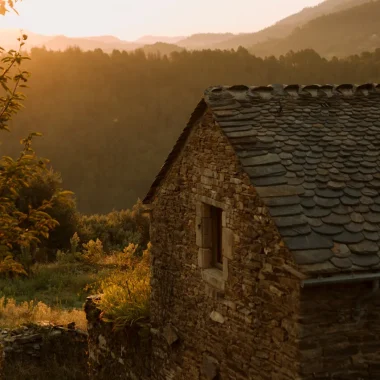
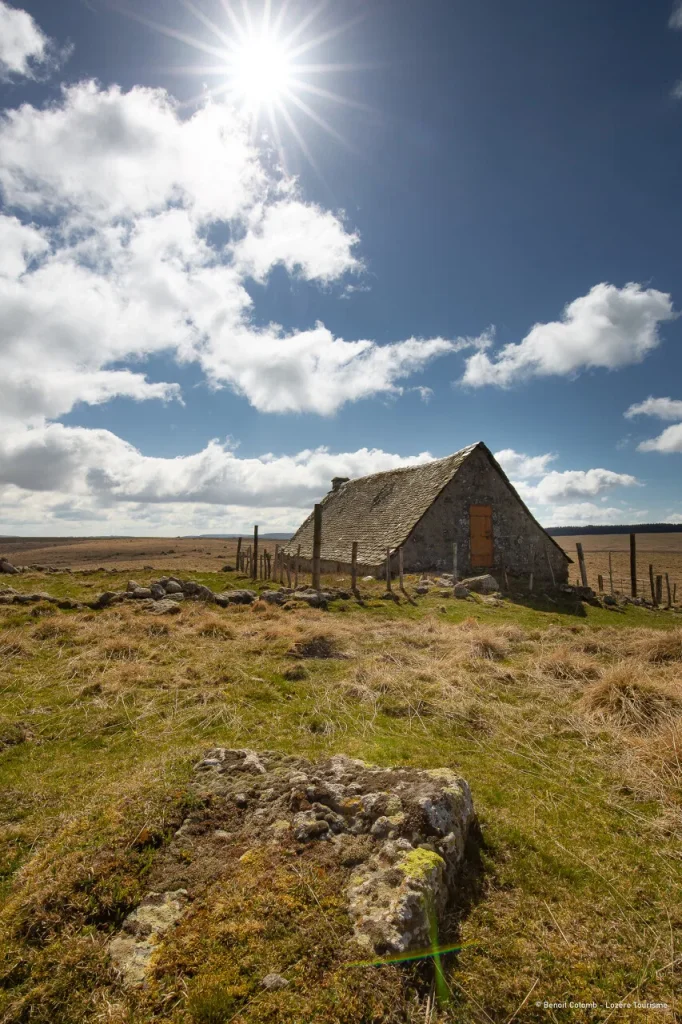
The built heritage of the Aubrac plateau blends seamlessly into the landscape thanks to its basalt and granite stones and slate roof tiles. The richness of the Aubrac’s agricultural and pastoral heritage is well established: its burons, built as early as the 18th century, were intended to house the ‘pastres’ – the herdsmen – and to produce cheese. The Aubrac is also home to numerous churches, bridges and crosses. These, usually made of basalt or granite, each have their own specific significance: marking the boundaries of a territory, keeping watch over a lake, or carrying a specific religious meaning… Don’t hesitate to venture off the beaten track to admire them up close!
A life of luxury on the plateau
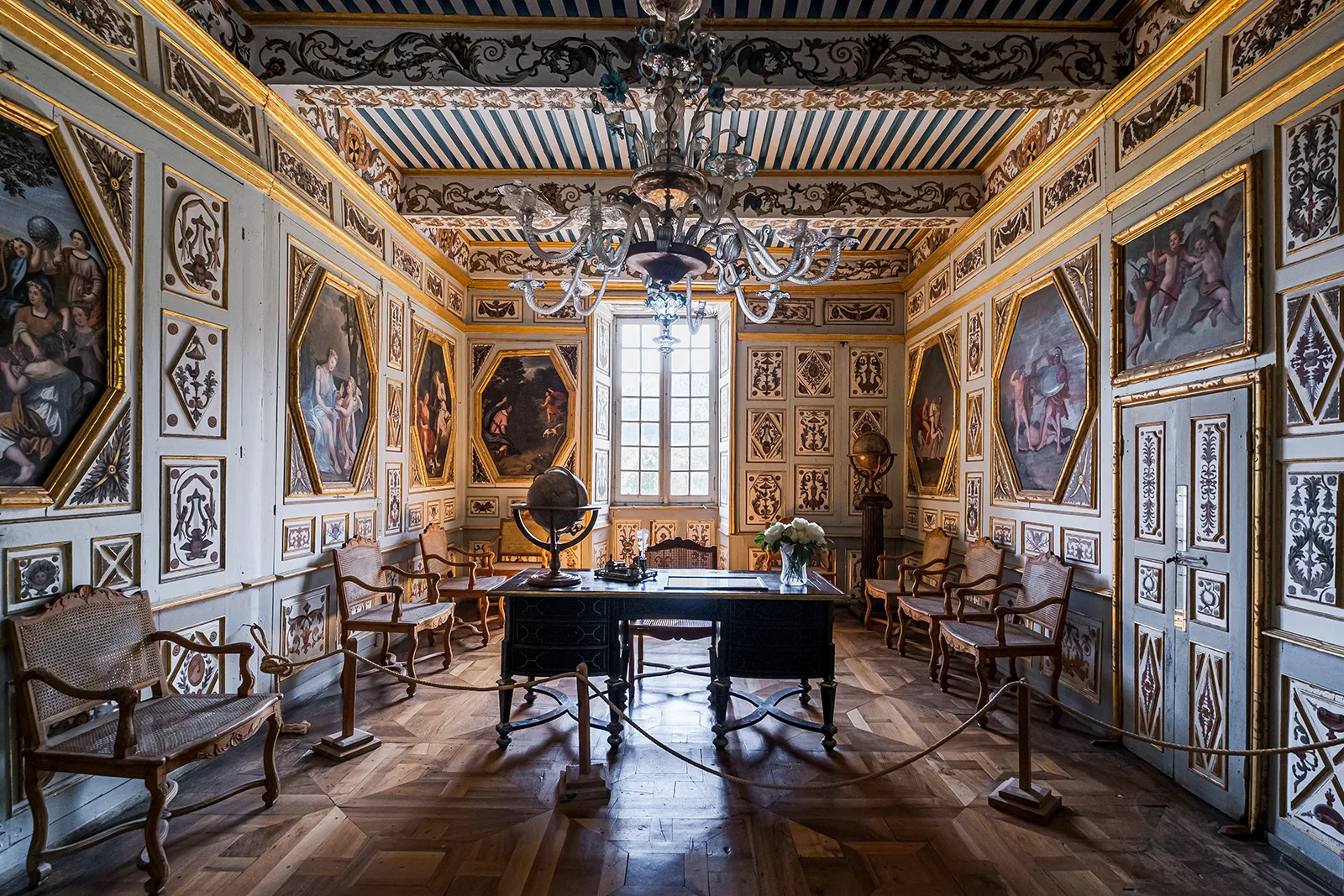
The Château de la Baume, near Prinsuéjols, is the only castle in the Regional Nature Park. Its granite and basalt walls contrast with its interior, which is richly decorated with paintings, frescoes and chandeliers of all kinds… It’s not for nothing that it’s nicknamed the ‘little Versailles of Gévaudan’!
Through the Seasons in the Aubrac
A landscape of a thousand colours
Fall in the Aubrac
A large number of wild mammals and birds have made the Aubrac their home. From the tiniest insects to the largest deer, the range of animals living in the meadows, undergrowth, rocky outcrops and watercourses is extremely diverse in the Aubrac: passerines, genets, birds of prey, brown trout, amphibians, stoats, freshwater pearl mussels, red deer… It is in autumn, in fact, that the stags let out their loudest bellow to attract females and ward off rival males. This is the stag rutting season!
A freezing winter for riders
NATURE RESORT OF MAS DE LA BARQUE
Playground

STATION DU BLEYMARD MONT LOZERE
Leisure centre

STATION DE SKI NORDIQUE DE LAUBERT – PLATEAU DU ROY
Cross-country ski trail

Tree climbing

Leisure centre

Sledge/bobsleigh run

Sharing our expertise
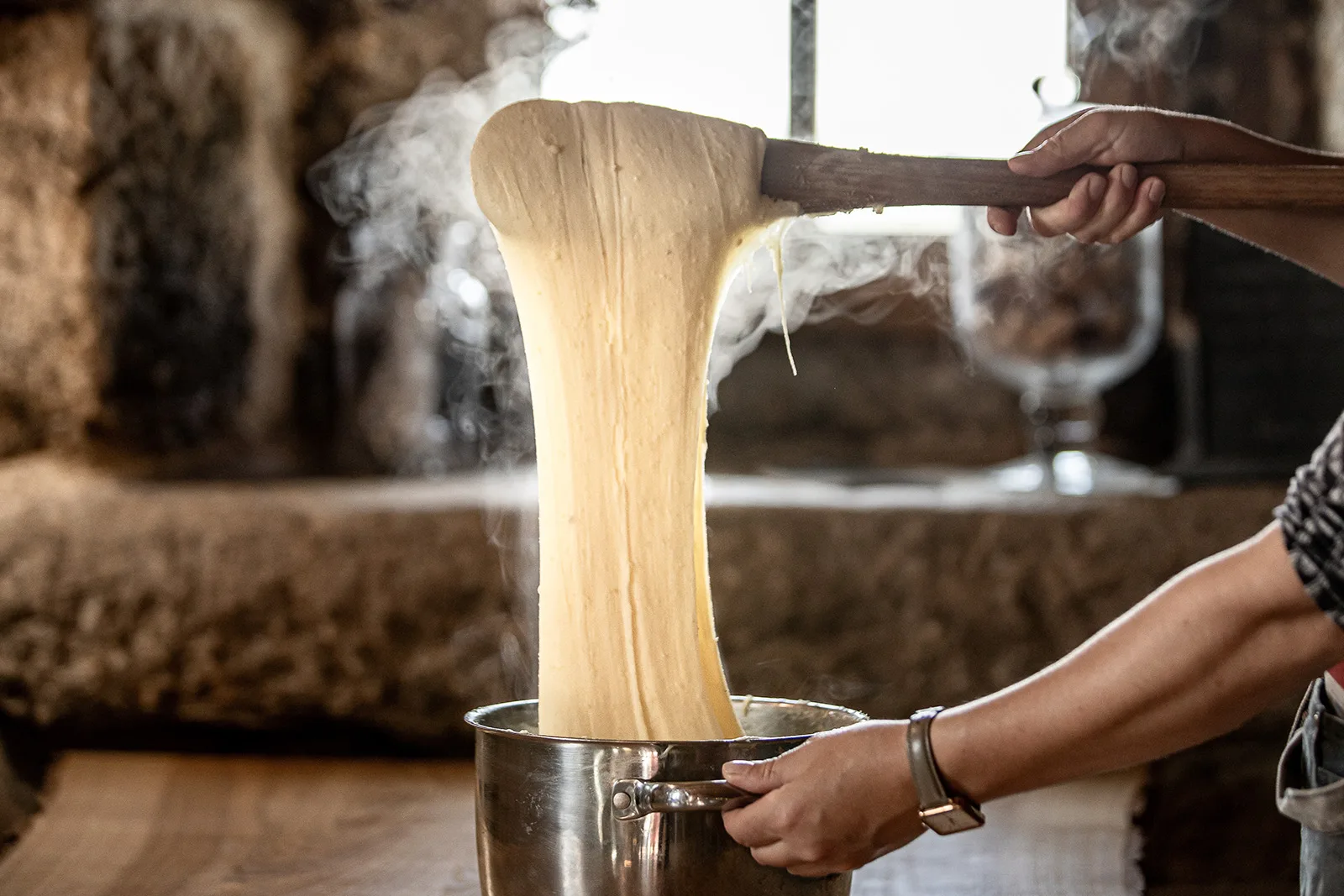
Numerous local produce, mostly rooted in agro-pastoral traditions, reflect the plateau’s strong identity and enjoy national recognition. Among them is the legendary aligot: legend has it that it was created following a meeting between three bishops – one from Lozère, another from Aveyron and the third from Cantal. Each brought back a foodstuff: the man from Cantal brought potatoes, the man from Aveyron brought his cheese, butter and milk, and the man from Lozère brought back a completely new ingredient: garlic. And so this delicious, comforting and stringy dish was born!
To continue the meal, it’s time for cheese – specifically, Laguiole AOP and AOC. This distinctive cheese, native to the plateau and partly produced in Lozère, is sure to delight your taste buds. To aid digestion, how about a cup of Aubrac tea? This plant, which is quite demanding in terms of its growing conditions, thrives on the plateau. Its floral notes and hints of mint and lemon balm have been enjoyed on the plateau since ancient times, particularly for its digestive properties.
Stay in the Aubrac region
Accommodation
Fancy a change of scenery in accommodation set in the heart of the countryside or in a village with undeniable charm? Give it a go and book your bed and breakfast, holiday cottage, self-catering accommodation, hotel room, stopover accommodation, camping pitch or room in a holiday village.


Bed and breakfasts


2 stars Hotels – restaurant

Hotels – restaurant

2 stars Hotels – restaurant


Group / holiday gîtes

Group / holiday gîtes

Group / holiday gîtes

Group / holiday gîtes

GITE D’ETAPE DE SAINT GERMAIN DU TEIL
Group / holiday gîtes

Group / holiday gîtes

Group / holiday gîtes

Group / holiday gîtes

Graded campsite

CAMPING MUNICIPAL DE NASBINALS
Graded campsite

How do I get there?
- By car from Mende, Sainte-Enimie, Florac, La Canourgue, Villefort, Langogne and Aumont-Aubrac
- By car from Paris, Bordeaux, Toulouse, Montpellier, Lyon, Marseille and Nîmes
- By train, on the Train de l’Aubrac line
- By bus with liO
- By tourist shuttle: minibuses that criss-cross Lozère far and wide in July and August
- By plane, via the nearest airports: Rodez, Clermont-Ferrand, Nîmes, Montpellier, Marseille, Lyon, Toulouse
Frequently Asked Questions
What is a Regional Nature Park?
The Regional Nature Park promotes the natural, cultural and scenic assets of a rural, inhabited area whose balance is fragile. It is a vibrant place and a hub for interaction, where consultation with and raising awareness amongst local residents are prioritised. To find out more about how Regional Nature Parks are set up and run, watch the explanatory video.
How can I find out more about the Aubrac Regional Nature Park?
Would you like to explore the Aubrac Regional Nature Park? To help you, here is the guide and the tourist map published by the PNR. Enjoy reading!