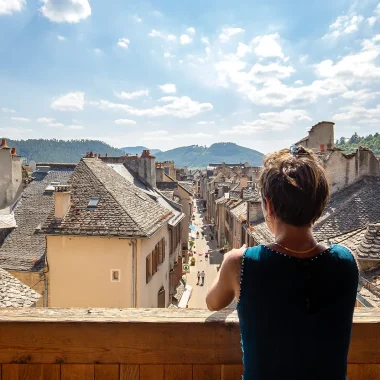
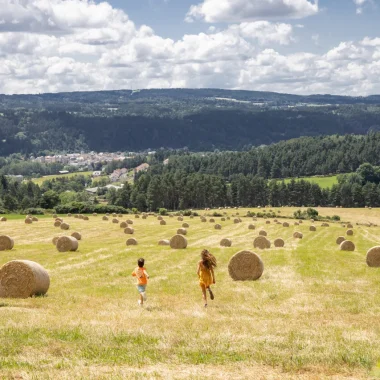
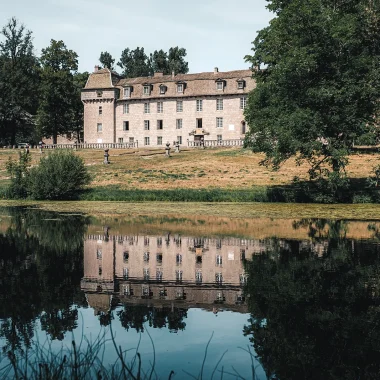
In 1724, Father l’Ouvreveul recorded as many as 136 castles. Some have since disappeared. But others continue to bear witness to the wealth of the Gévaudan region, which once boasted eight great baronies among the richest in Languedoc. With their architectural beauty, elegant décor, authentic local character and exceptional setting, certain châteaux offer a unique experience and a charm all of their own.
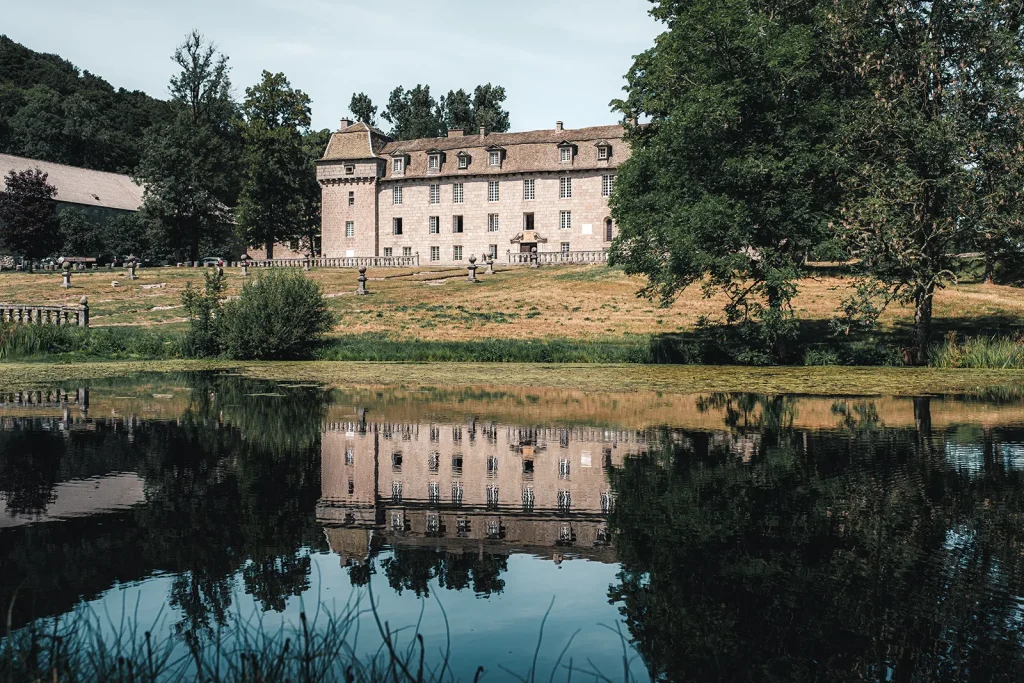
1. La Baume Castle
In the Middle Ages, the barony of Peyre was one of the most powerful in the Gévaudan region. As their fortified castle had been destroyed during the Wars of Religion, the lords of Peyre, Antoine de Grolée and his wife Marguerite de Soulages, decided in 1630 to build the Château de la Baume and to transfer the seat of the barony there. Owned by the de Las Cases family for two hundred years, the Château de la Baume, which is inhabited all year round, has been listed as a historic monument since 1973. And a tour of the château holds many surprises. It begins in the older part, the north wing, which houses the château’s largest room: a 120 m² billiard room. The tour then takes visitors through a series of rooms, including a dining room – a rather rare feature at the time – and César de Grolée’s study. Having inherited the estate, César de Grolée commissioned local craftsmen to decorate the château before embarking on extension works that now form the south wing.
2. La Caze Castle
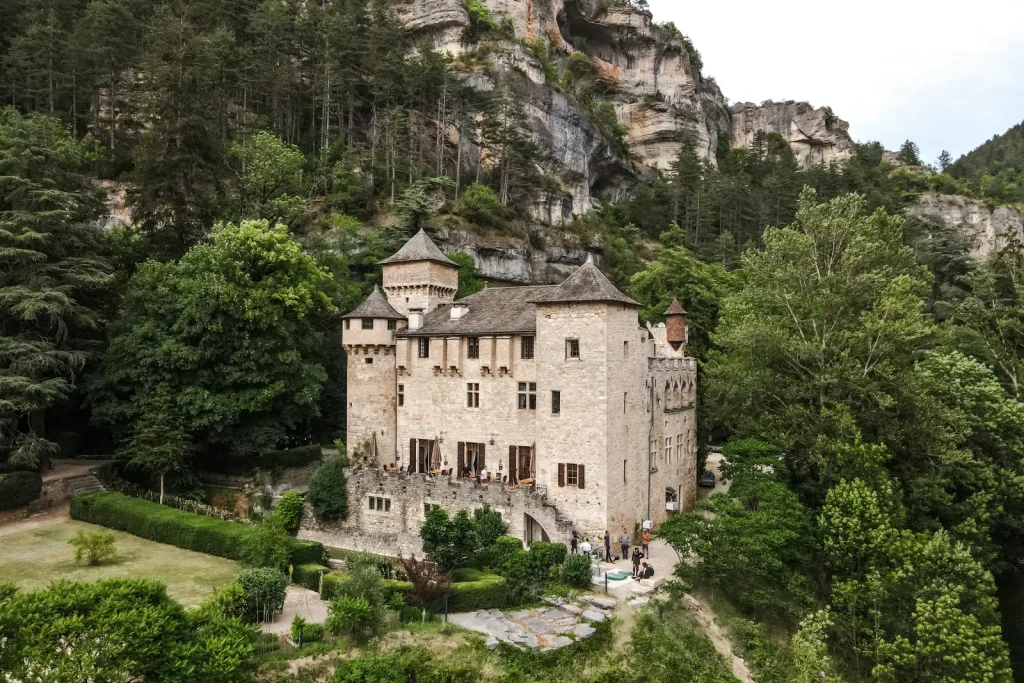
It is said to have been built at the end of the 15th century. Listed as a historic monument, the Château de La Caze is home to the ‘Chambre des Nymphes’. On the ceiling, Prunier (17th century) painted the eight women who successively ruled the seigneury. It is said that their laughter can sometimes be heard echoing through the charming building… Used as a prison during the Revolution and rebuilt in the early 20th century, the château is now a luxury hotel set within grounds featuring centuries-old trees.
3. Saint-Alban Castle
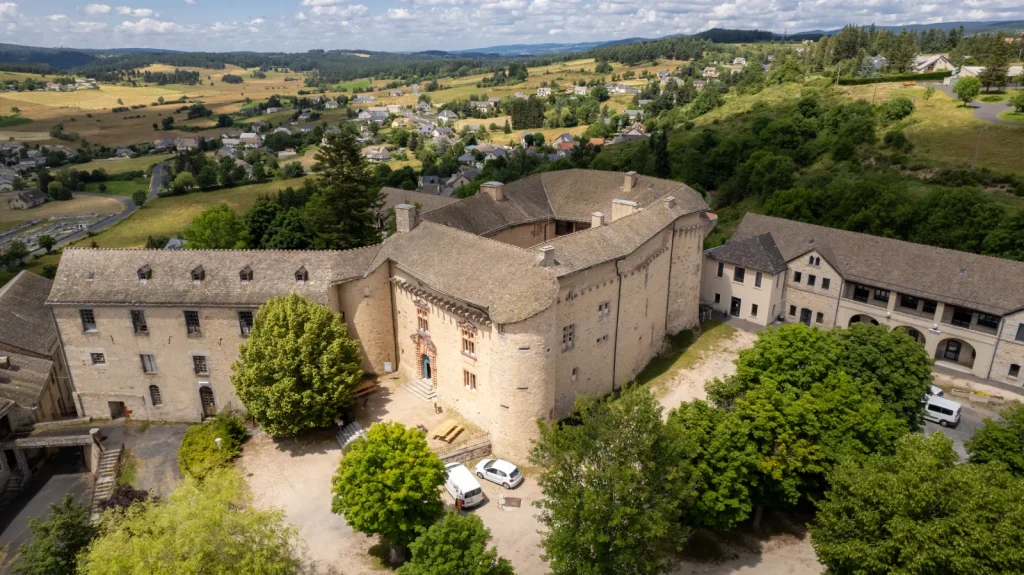
Its gateway and galleries, built of arkose (pink sandstone), give it the air of an Italian theatre. But this is not the only attraction of this medieval fortress, situated on the Way of St James. The Count of Morangiès made it one of the rallying points for the hunts against the Beast of Gévaudan, which plunged the region into mourning between 1764 and 1767. For over a century, it housed Lozère’s first asylum, before becoming home to the Tourist Office today.
4. Saint-Julien-du-Tournel Castle
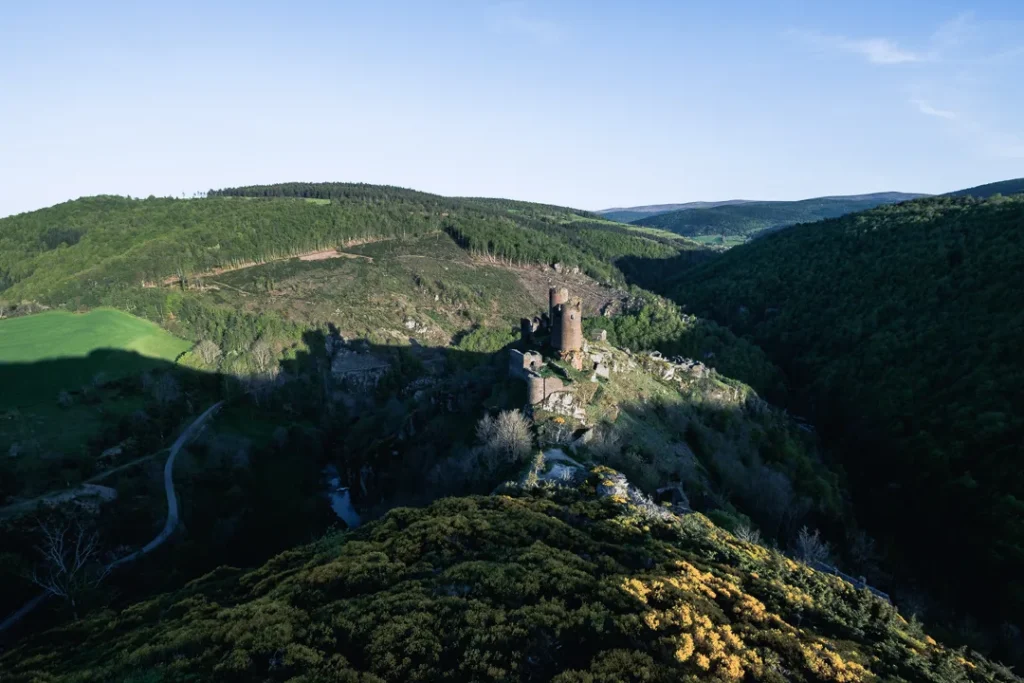
From its six towers, one can see Mont-Lozère. Built by the du Tournel family on a rocky outcrop overlooking the upper Lot Valley, it originally served as a defensive castle. In the days when the Château de Saint-Julien-du-Tournel was inhabited, one had to pass through seven gates before entering. Its imposing appearance now makes it a popular filming location. Featured in Coline Serreau’s film “Saint-Jacques… La Mecque“, it was also one of the filming locations for Simon Astier’s French series “Hero Corp“.
5. Castanet Castle
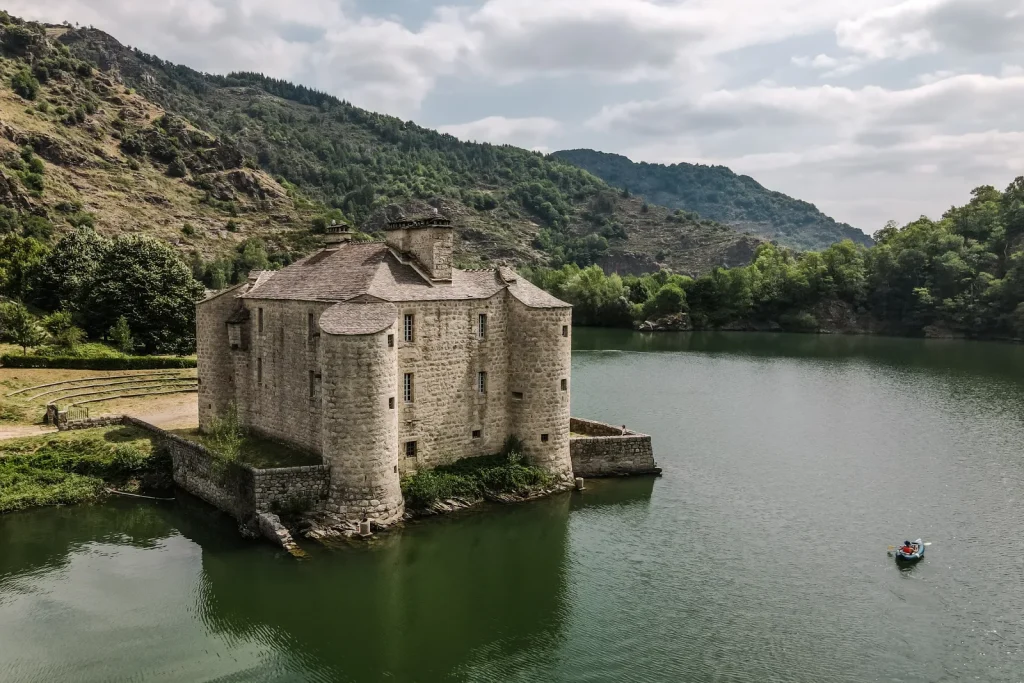
It is thanks to its listing as a historic monument that Castanet Castle was spared from being submerged during the construction of the Villefort Dam in the 1960s. Built at the end of the 16th century, it was used for two centuries by the Isarn family, before being sold as national property during the Revolution. Following a complete restoration after a fire, Castanet Castle – whose name derives from the Occitan word for ‘chestnut’ – reopened its doors in 2006.
6. Miral Castle
Built in the 12th century overlooking the confluence of the Tarn and the Runes rivers, and subsequently left to fall into ruin, Miral Castle was restored by Mr and Mrs Fauterelle. This former Catholic fiefdom in a Protestant region has been listed as a historic monument since 1984.
7. The Château de la Garde-Guérin
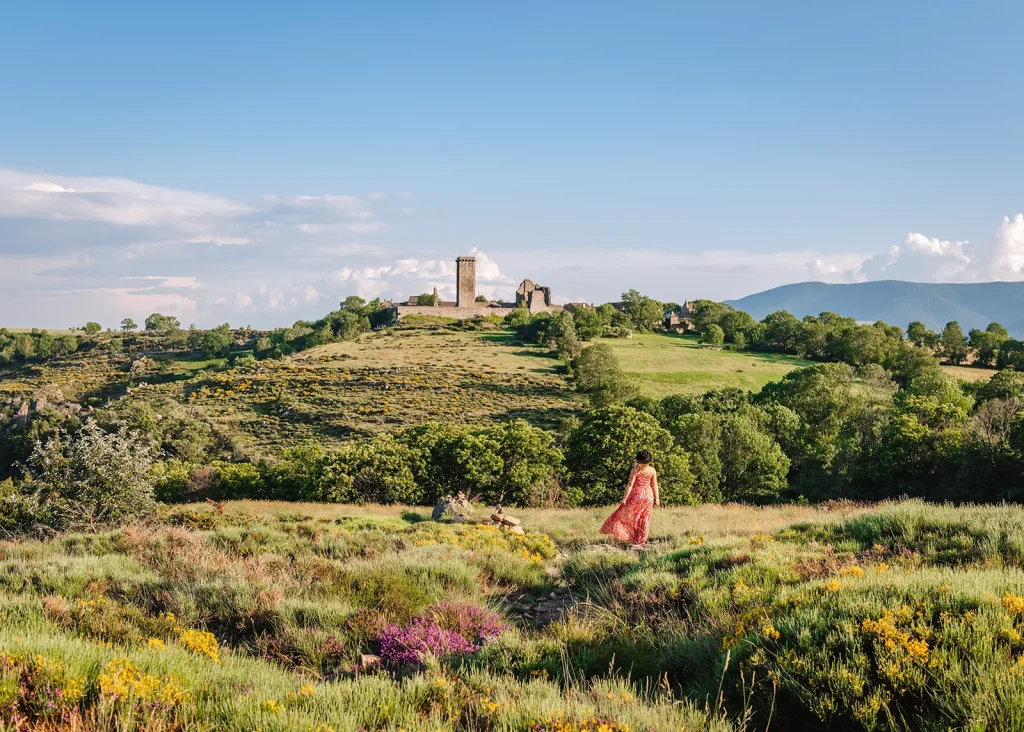
On a windswept plateau, the Château de La Garde-Guérin occupies a strategic position. A refuge for travellers and pilgrims caught unawares by the harsh climate, it served as a toll station on the Régordane route in the 12th century, facilitating trade between Auvergne, Languedoc and the Mediterranean. A visit to the well-preserved fortified village is a must. The village is listed as one of the ‘Most Beautiful Villages in France’.
8. Roquedols Castle
Its tall, rectangular silhouette rises above the Bétuzon valley. The lintel above its entrance door, bearing the date 1534, suggests that it was built in the 16th century. The name ‘Château de Roquedols’ means, in any case, ‘soft rock’ or ‘gentle rock’.
Find out more
Thematics