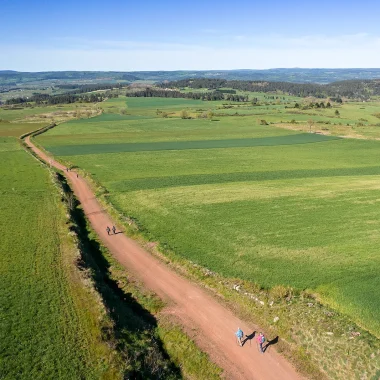
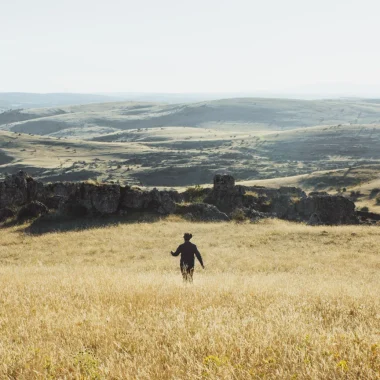
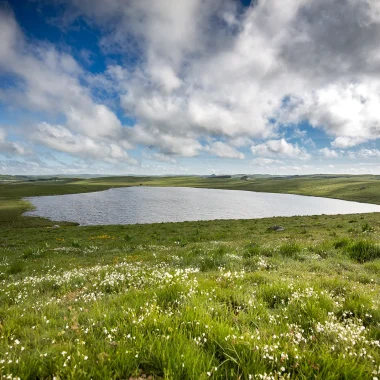
On the Causse Méjean, a wild breed of horse known as the Przewalski horse has found a home thanks to the Takh charity.
Przewalski’s horse
The story of a reintroduction
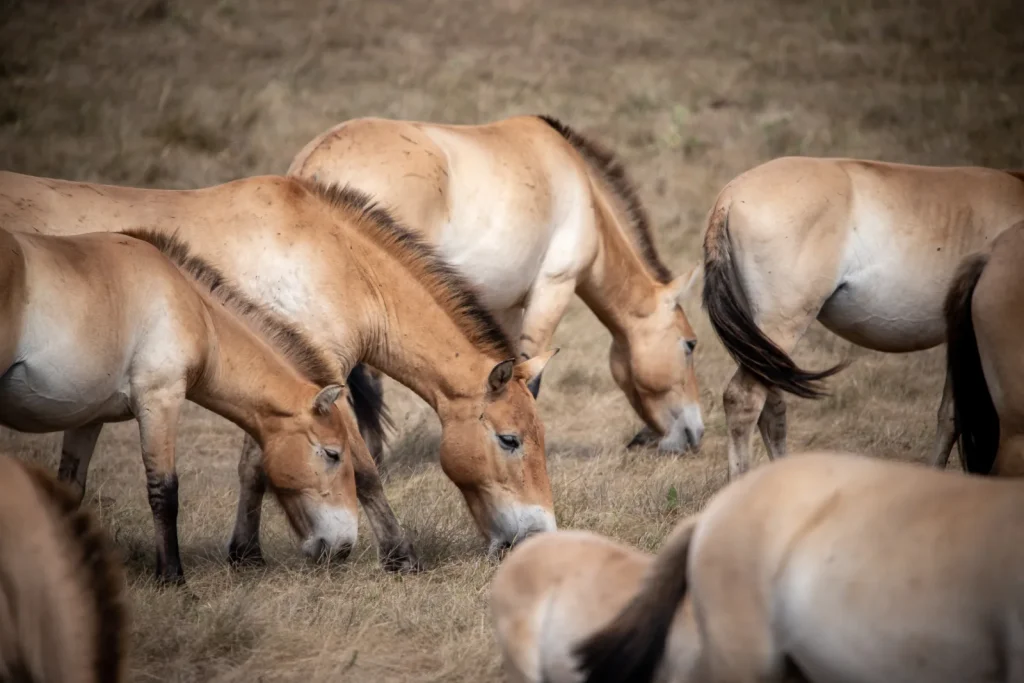
The most remarkable story concerns the rescue of a horse called Przewalski, discovered in Mongolia at the end of the 19th century by the man after whom it was named. This was Colonel Nikolai Przewalski, a Russian explorer who discovered and identified this species in the Gobi Desert in 1879. Even back then, the Mongolians were already living alongside this ancestor of domestic horses.
In the 1960s, the Przewalski’s horse was on the verge of extinction, partly due to hunters and capture campaigns. Only 14 survived. Thirty years later, the number of horses in captivity had risen to 1,000, prompting consideration of a possible reintroduction into Mongolia.
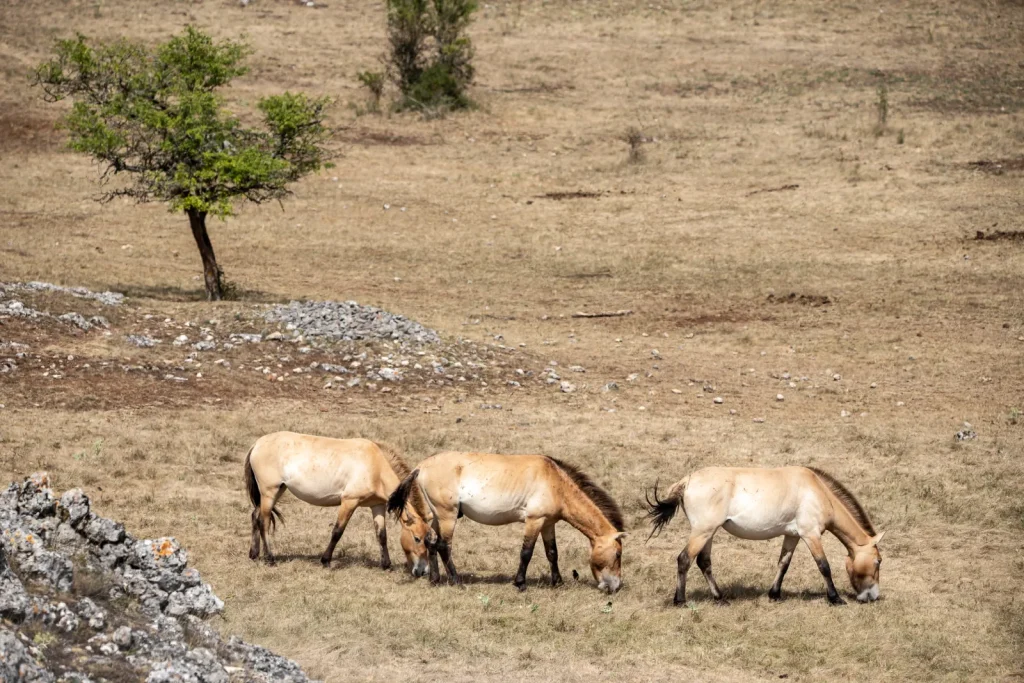
In terms of its appearance, the Przewalski’s horse has a large head, long ears, high-set eyes, a thick neck and a large body with a dark muzzle stripe. It can reach a height of 1.60 metres, a length of 2 metres and a weight of 250 kg. In 2015, 12 horses were flown to Kazakhstan, the land of their ancestors, where they were successfully reintroduced.
Thematics