
A prime honey-producing region, Lozère offers both a vast variety of honey-based products and time-honoured beekeeping expertise. From Margeride to Aubrac, via the Cévennes, the department practises mountain beekeeping amidst exceptional landscapes. The richness of the flora and the quality of the environment make Lozère’s honeys rare and highly prized products.
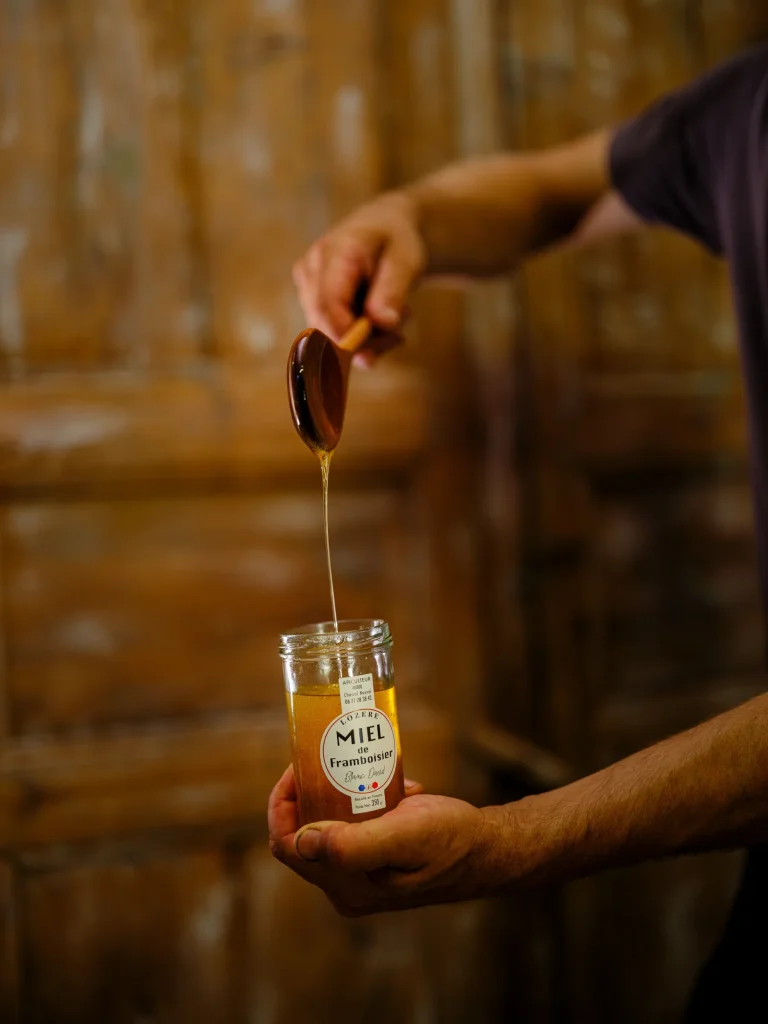
Honey from Lozère: an exceptional product
Lozère is well known for its charcuterie and ‘Aubrac’ beef, renowned for its tenderness. Cheeses and chestnuts also contribute to the department’s gastronomic reputation. It is sometimes wrongly overlooked that honey is one of its most exceptional products. Produced through mountain beekeeping, Lozère honey is made under climatic conditions that can be challenging: the department’s average altitude is around 1,000 metres, making it the highest department in France. Consequently, harvests are small and very often unpredictable. Nevertheless, these challenges become strengths when it comes to assessing the quality of Lozère honey: the harsh conditions protect the environment from excessive human interference.
“Honeys from Lozère are, by their very nature, mountain honeys, almost all of which are derived from a wide variety of wild plants growing in a preserved environment. Although production is very low – around ten kilos per hive – our honeys, derived from a diverse range of flora that varies from one region to another – from the low-growing vegetation of the Causses to the moors of the Aubrac, via the Cévennes valleys – are all distinctive and of exceptional quality. ”
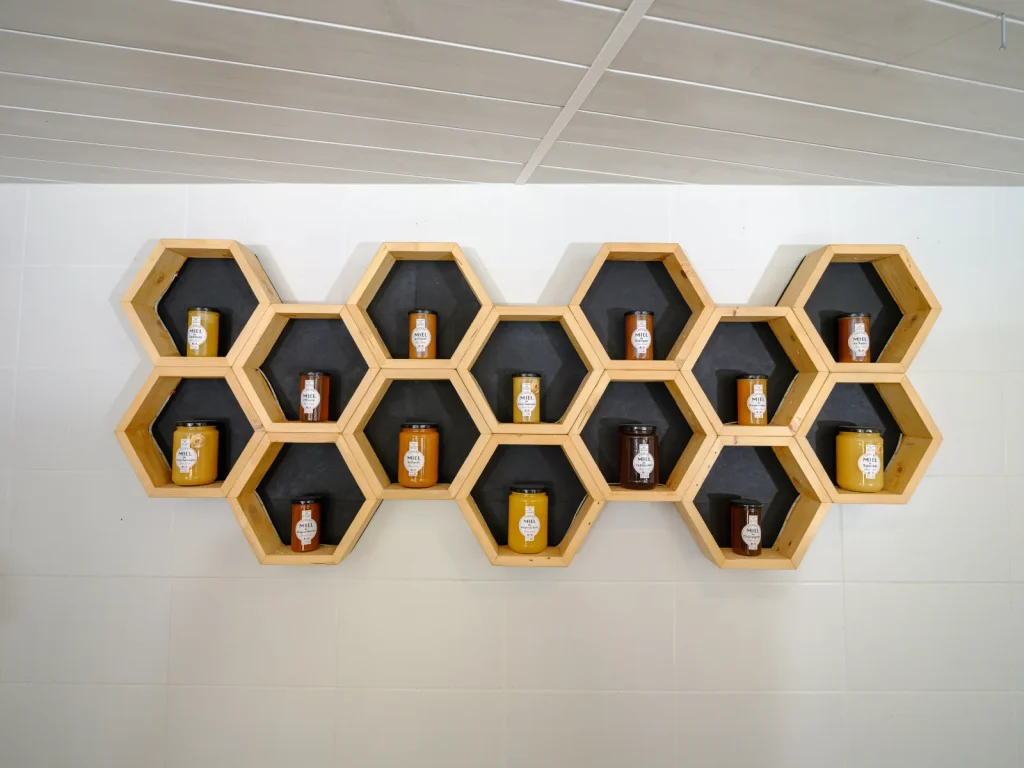
In fact, one cannot refer to ‘Lozère honey’ in the singular: there are so many varieties that the plural is the only appropriate form. “Whilst beekeepers used to harvest honey once a year, nowadays they harvest their hives several times depending on the flowering seasons, thereby producing rare single-flower honeys,” explains Henri Clément. “In Lozère, you can therefore enjoy mountain honeys derived from numerous plants, as well as honeys made from dandelion, raspberry, bramble, chestnut, heather, fir and sainfoin… though, unfortunately, their production is irregular and unpredictable.”
Heritage feature
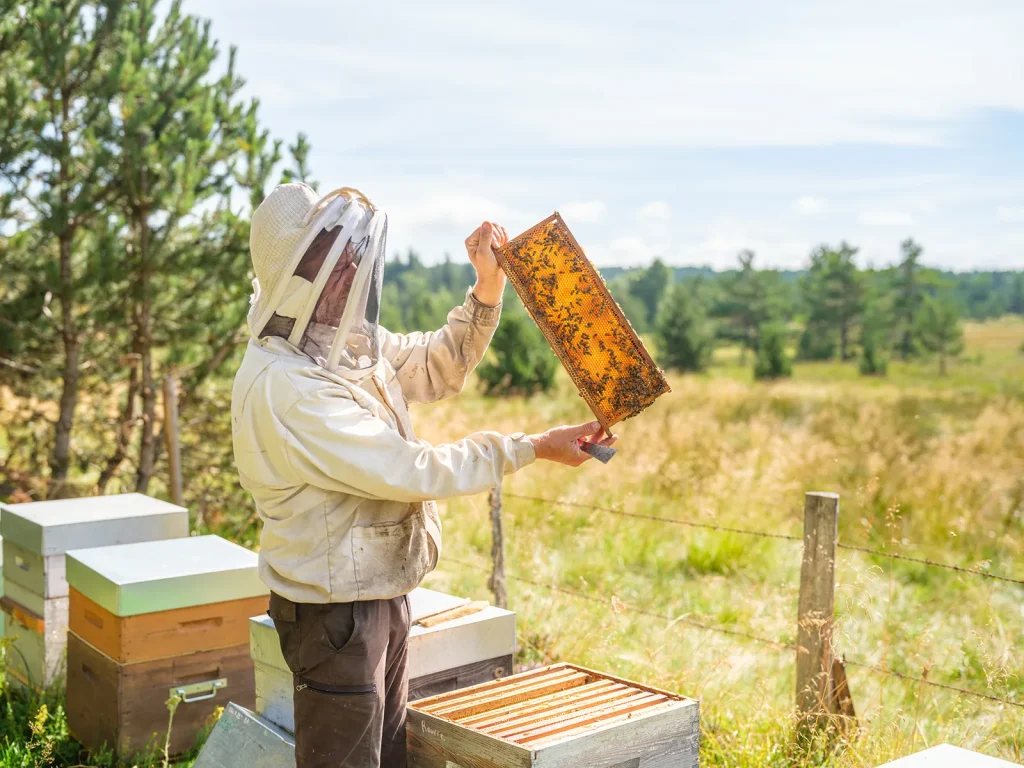
This astonishing diversity stems from the passion of the forty or so beekeepers who make their living exclusively from honey production. Not to mention the many people with multiple jobs for whom honey production provides a significant source of additional income, and the hundreds of family-run producers who provide for their loved ones. Honey in Lozère is a true tradition: “Bees have been an integral part of Lozère’s heritage since time immemorial,” says Mr Clément. Housed in straw hives in Margeride and Aubrac, or in chestnut tree trunks – known as ‘brusc’ – in the Cévennes, each family maintained around ten bee colonies that supplied their annual honey requirements, the only sweet substance available and essential to the whole family. ”
A closer look at log hives
Hive-trunks are, moreover, a distinctive feature of the Cévennes that has endured, a true living part of the region’s heritage. “Hive-trunks have existed in the Cévennes since the Middle Ages. Each family owned a good dozen, sometimes more. In Fraissinet-de-Fourques, on the northern slope of Mont Aigoual, at the start of the last century, a beekeeper had already made a living from them and maintained over a hundred. The tree-trunk hives were set up in steep locations, sometimes surrounded by high dry-stone walls and planted with boxwood to encourage egg-laying in the spring. ’ As the forerunners of the frame hive introduced in the 20th century, log hives are curiosities of which the people of the Cévennes are very proud.
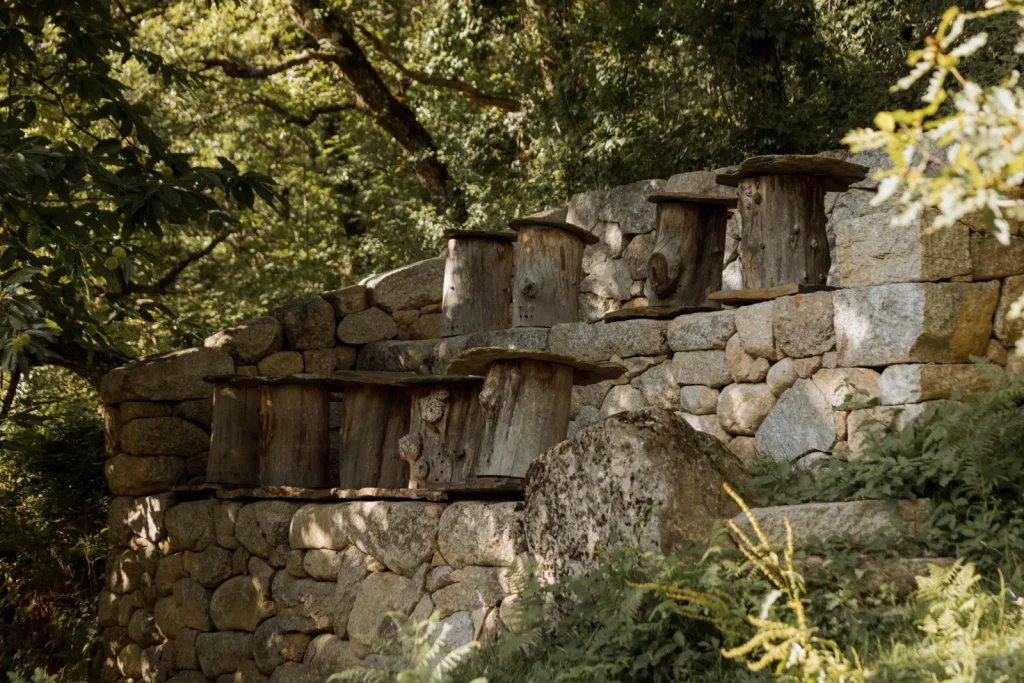
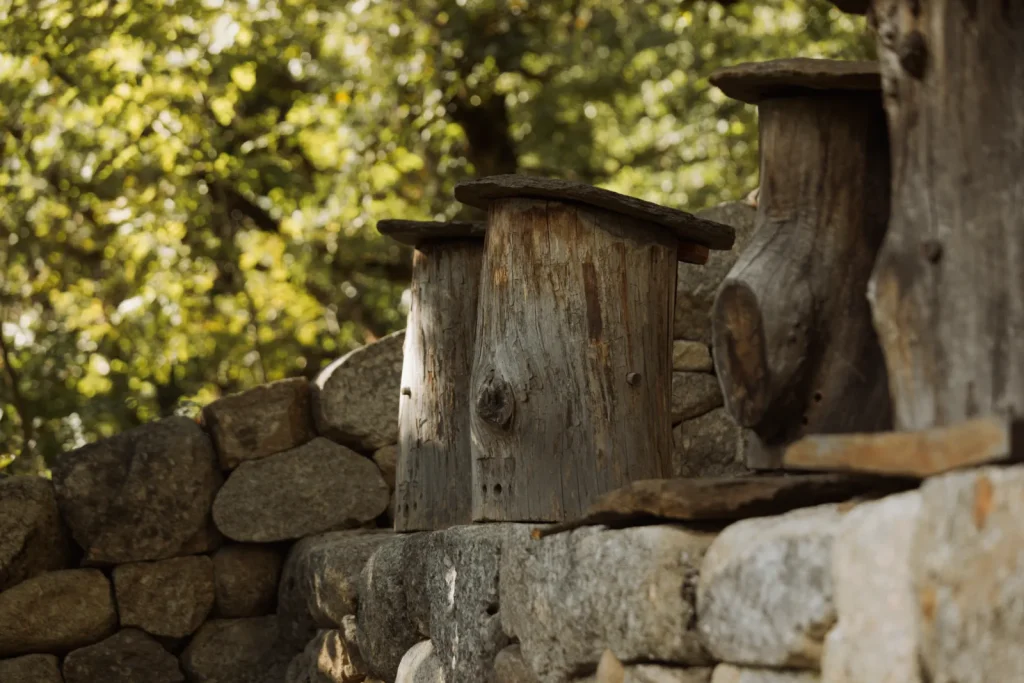
“The logs are hollowed out and the bees are completely free to build their combs as they please, attaching them to a wooden crossbar fixed halfway up,” continues Henri Clément. “The logs are insulated from the ground by a slate and protected from the elements by another slate covering them. The honey is harvested in small quantities once a year and is then pressed and filtered. ADSPAC, an association dedicated to the preservation and development of beekeeping in the Cévennes, was set up to maintain these highly distinctive hives, which form an integral part of the local heritage. ’ Further proof, if any were needed, that Lozère’s honeys are a true institution. To be enjoyed without moderation…
Thematics