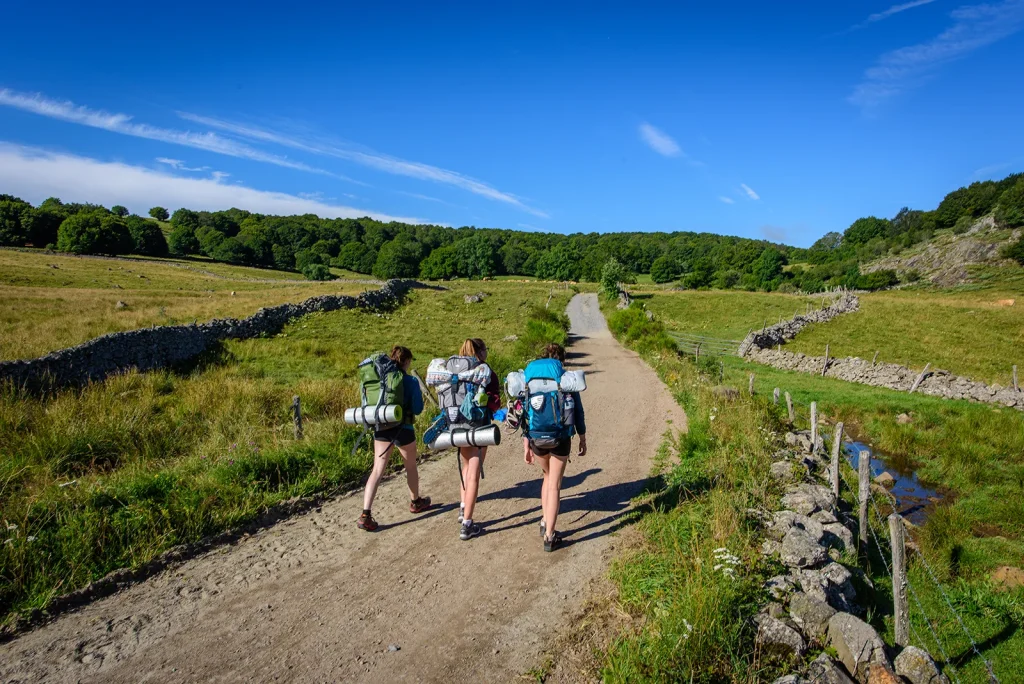
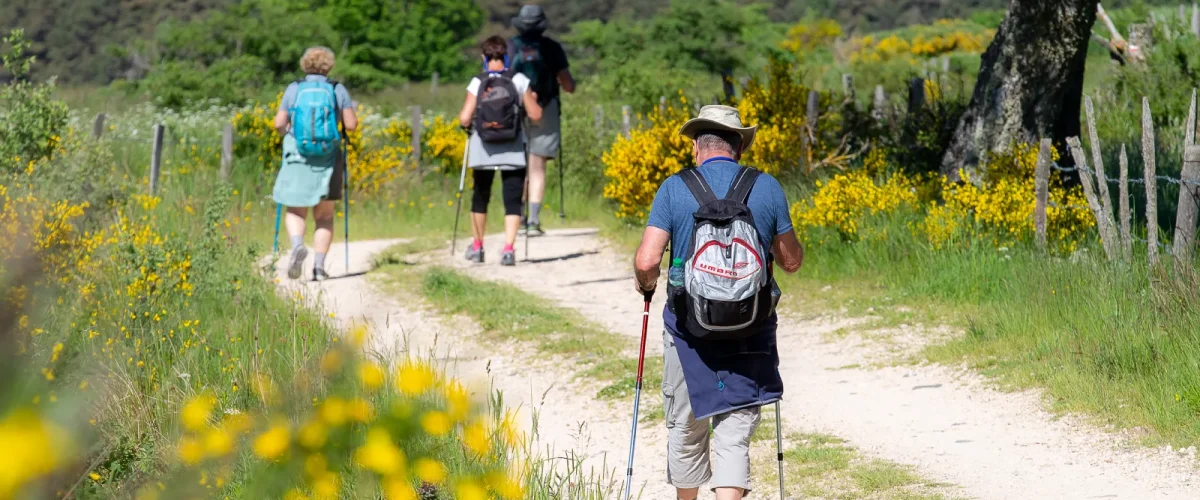
Every year, from May to September, several thousand walkers explore the long-distance walking trails and paths of Lozère. Lozère is one of the French departments with the highest number of GR routes. They all offer breathtaking views; the hardest part is choosing which GR route to take. Here we focus on five of them – the most renowned.
There are numerous long-distance and short-distance hiking trails (GR, PR) in Lozère, as well as regional long-distance trails (GRP), which you can explore either alone or in a group. The 7,000 km of signposted trails criss-cross the region, from the Margeride and Aubrac plateaus to the Grands Causses, and from the Gorges du Tarn and the Gorges de la Jonte to the Cévennes and Mont-Lozère. Whatever the purpose of your walk – whether it’s a spiritual quest, a desire to follow in the footsteps of illustrious predecessors, curiosity about unusual natural landscapes and distinctive architecture, or a wish to enjoy sport in an unspoilt environment – your expectations will be met. Lovers of flora and fauna will be able to spot does, roe deer, buzzards, vultures, foxes and Przewalski’s horses, amongst others, as well as a wide variety of plants, flowers and trees. The department of Lozère is renowned for its outdoor sports and walking.
The Way of St James – GR®65
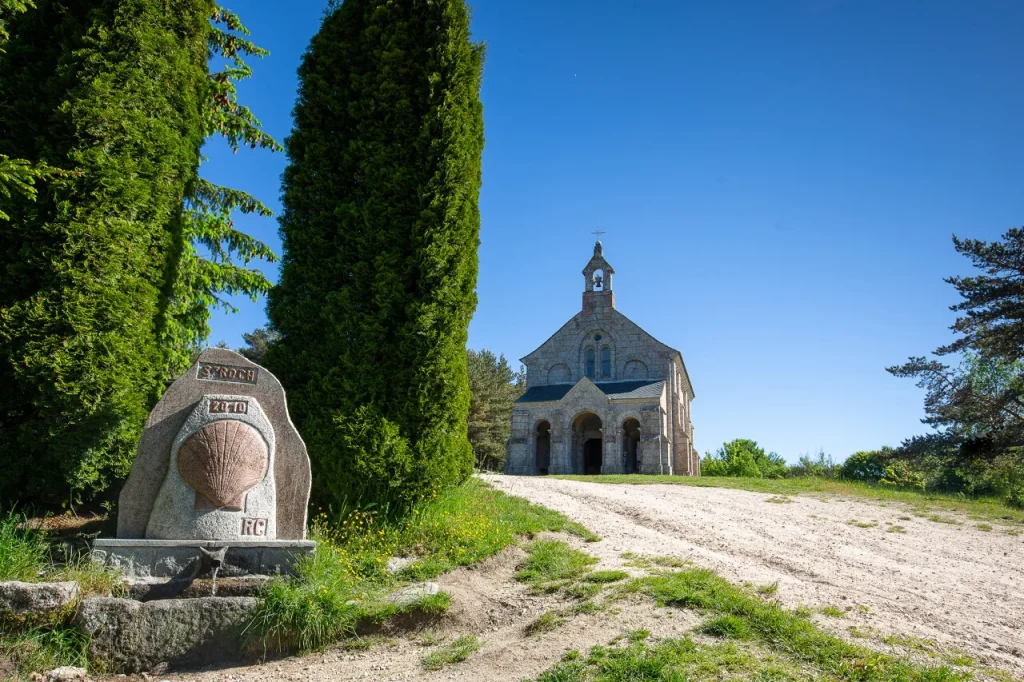
Every year, more than 200,000 hikers and pilgrims set off to recharge their batteries on this legendary route. They walk with their minds and hearts open to the breathtaking scenery, in search of ‘revelations’ often linked to nature and human encounters. In Haute-Loire, you can join the Way of St James, which runs from Geneva (Switzerland) to Roncesvalles (Spain). Leading to the site of remembrance dedicated to St James the Greater in Galicia, the GR®65 starts at Le Puy-en-Velay. In the Lozère section, the Way of St James crosses part of the Margeride and Aubrac regions, passing through St-Alban-sur-Limagnole, Aumont-Aubrac, Nasbinals and numerous villages. The journey is rich in small-scale heritage: crosses, chapels, drinking troughs, fountains, mills, towers and stone bridges. Away from the GR route, a few farms provide accommodation and meals.
The Stevenson Trail – GR®70
From Le Puy-en-Velay to Alès, a distance of 250 km, the Stevenson Trail (GR®70) follows the route taken by Robert L. Stevenson in 1848, accompanied by his donkey Modestine (Le Monastier-sur-Gazeille/St-Jean-du-Gard). To ensure a comfortable journey, walkers can make use of the network of service providers who are partners of the association ‘Sur le chemin de Robert Louis Stevenson’: accommodation providers, restaurants, donkey hire companies, cultural sites, etc. Since 1994, this association has aimed to organise the network of tourism stakeholders along the route, to promote this cultural trail and to support walkers in preparing for their adventure on the GR®70.
The Saint-Guilhem Way
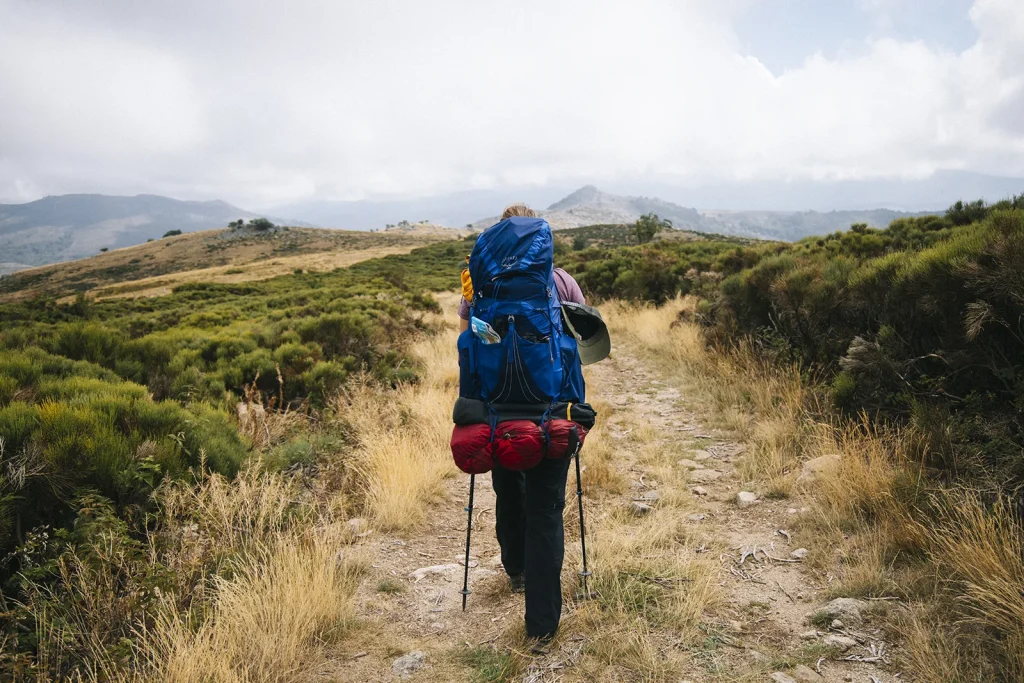
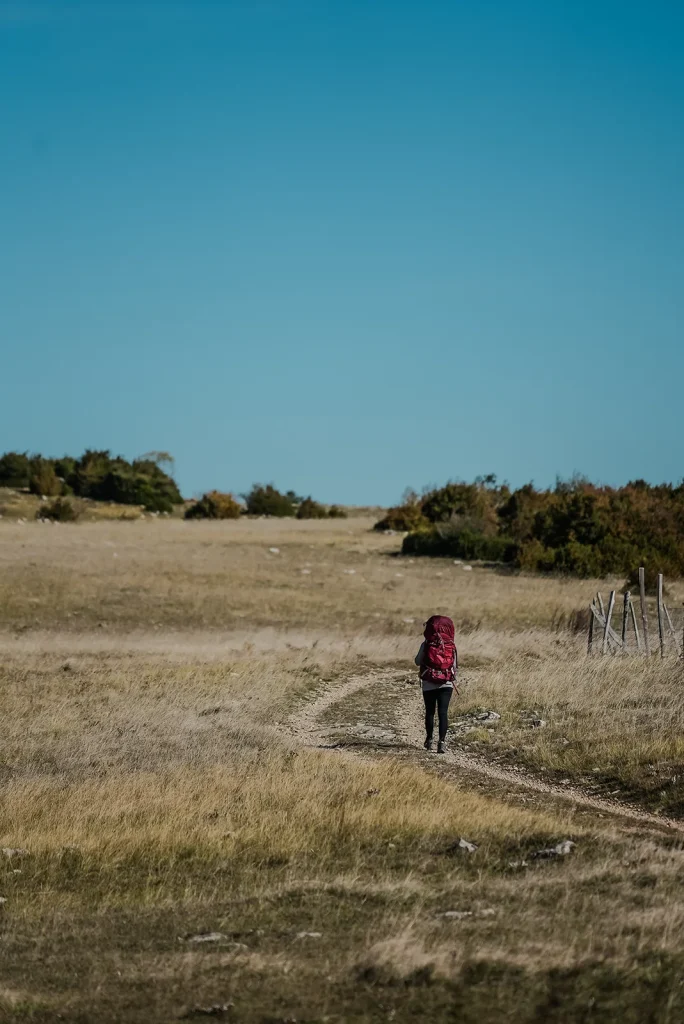
Right up until the 1960s, herds would migrate from the Montpellier hinterland to the Aubrac plateau via the ‘draille de l’Aubrac’. It is this route that the Chemin de Saint-Guilhem follows, setting off from Aubrac to reach the site dedicated to Saint Guillaume d’Orange. By this point, you will have walked 300 km and crossed four departments: Lozère, Aveyron, Gard and Hérault, passing through 27 municipalities, 17 of which are in Lozère. From granite plateaus to high-altitude meadows, walkers make their way through the Gorges du Tarn, across the limestone Causse du Méjean, up the Aigoual massif and on to the Cirque de Navacelles. From Aumont-Aubrac to St-Guilhem-le-Désert, the association ‘Le chemin de Saint-Guilhem’ offers two routes and accommodation along the trail or nearby. It is advisable to book in advance.
The Urbain V Trail – GR®670
This is a new GR route that crosses Lozère from west to east. It takes in four UNESCO World Heritage sites: the Way of St James, the Causses and the Cévennes, the Pont du Gard and the Papal City of Avignon. Starting from Nasbinals, on the GR®65, the Urbain V trail links up with the Way of St James. However, it is dedicated to Guillaume de Grimoard (1309–1370), who was elected Pope in 1362 and known as ‘The Blessed’. From Aubrac to Avignon, it stretches for 325 km, of which around 189 km are in Lozère. Don’t miss the heart of Mende – the Pont Notre-Dame, Notre-Dame Cathedral and the Saint-Privat hermitage… – and along the way, Quézac, Florac, Grizac and its castle – Guillaume’s birthplace – and St-Germain-de-Calberte, before reaching the Gard.