Are you staying in Lozère and would you like to camp under the stars? Here are our tips on how to respect the environment, other people and the rules when camping in Lozère.
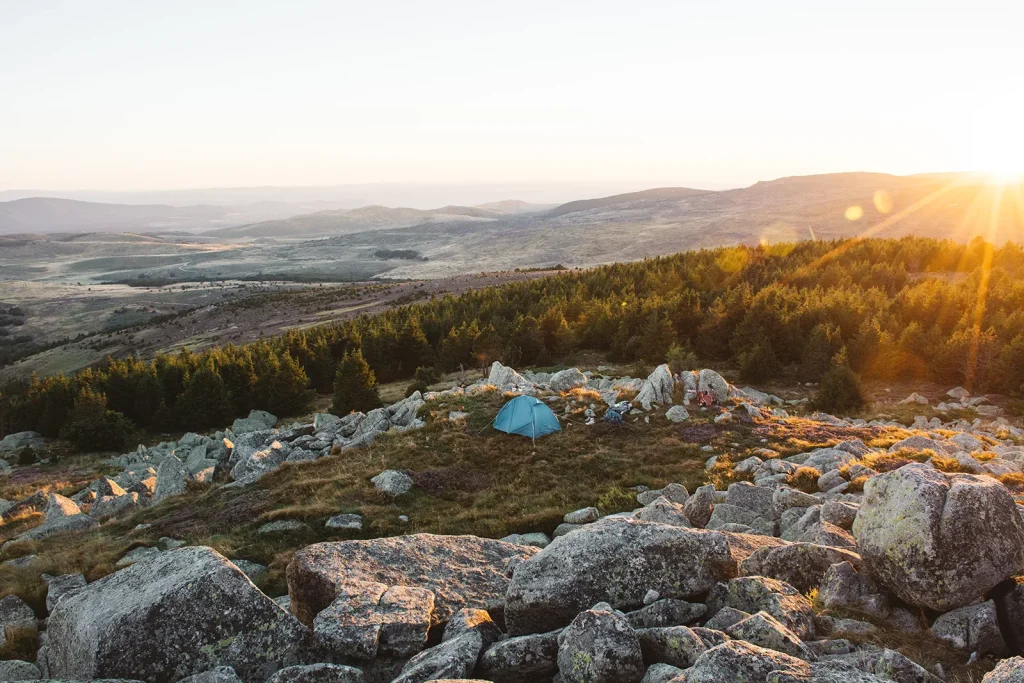
What are the differences between bivouacking and wild camping?
Bivouacking involves pitching your tent at a spot for one night, usually from sunset to sunrise. Wild camping involves staying for several days, usually with a vehicle, in the heart of the countryside. Both forms are permitted in France wherever they are not prohibited. However, there are numerous restrictions, such as in forests, woodlands, nature reserves, on public roads and paths, within 500 metres of a listed or heritage-listed monument, within 200 metres of a drinking water catchment, on private land… where camping is prohibited. However, wild camping is often tolerated in these areas.
Find a location
It is forbidden to camp in a tent in urban areas or near roads. Always remember to ask the landowner’s permission before setting up camp for the night on what appears to be private land. When out hiking, you can usually set up camp near mountain huts, but always check with the hosts first and avoid pitching your tent near livestock or a river: the water level could rise rapidly if it rains. In most cases, lighting fires is prohibited. Don’t hesitate to contact the local council at your destination to find out the exact regulations.
Please remember to respect nature and the environment around you, and never leave any trace of your visit. One of the main rules of camping is to leave the site as you found it – or even cleaner.
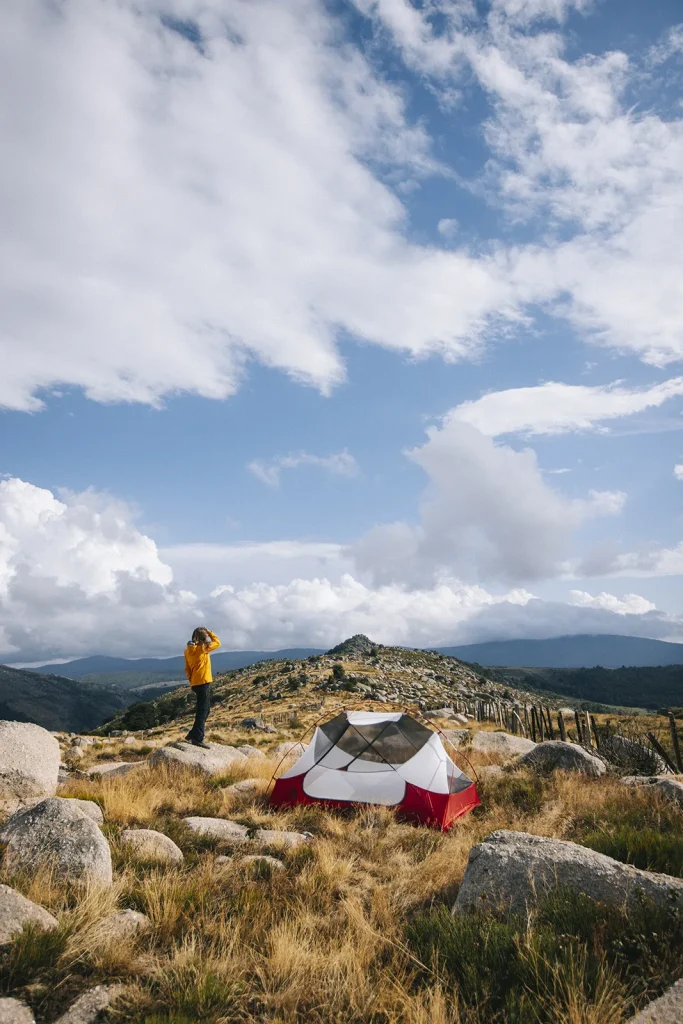
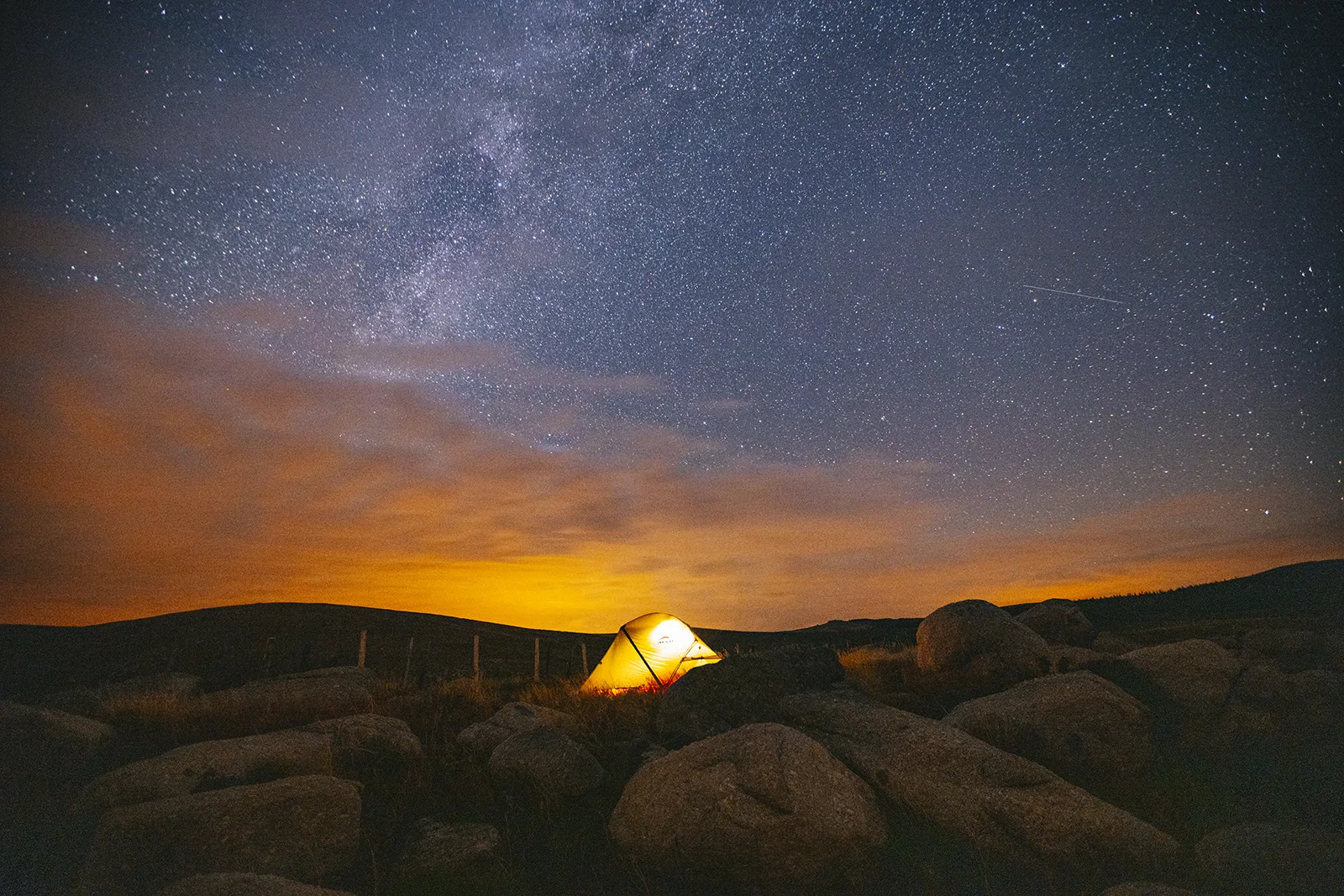
In the Cévennes National Park
There are specific regulations within the Cévennes National Park. Wild camping is permitted in the heart of the park provided all of the following conditions are met:
- for non-motorised walkers;
- in a lightweight tent where you cannot stand upright, or without a tent;
- for just one night in a row;
- between 7 pm and 9 am;
- along the signposted long-distance walking routes, with the exception of the sections in question;
- no more than 50 metres on either side of the long-distance walking route.
In all other cases, camping is prohibited within the Cévennes National Park.
In a van and a motorhome
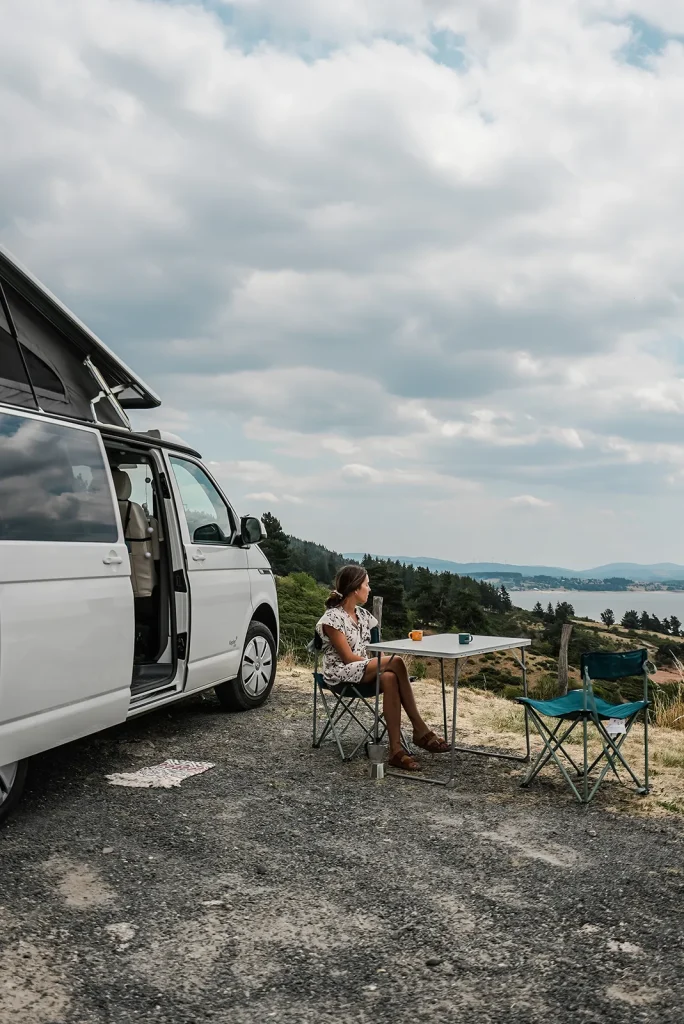
Camping in the great outdoors
As things stand, camping in a converted vehicle is not prohibited in France, provided that a few simple rules are followed:
- Parking must not be dangerous, obstructive or unreasonable;
- Do not spend more than 24 hours in the same place;
- Do not set up all your belongings outside (camping on public roads is prohibited): there’s no need to set out your camping table, chairs, camping stove, cool box, etc.;
- Being able to leave at any time;
- Make sure that the area where you wish to spend the night does not have any signs prohibiting this (built-up areas, national or regional parks, etc.);
- Not to be situated within a protected area (listed sites, designated sites, etc.);
Although camping in a campervan makes you look forward to waking up to incredible scenery every morning, that’s not always the case. The key is to find a quiet spot, out of sight of others, with a splendid view!
Here are a few ideas for possible places to camp in a campervan in Lozère: by a river or lake, in the forest, in a public car park, at a picnic area, in a supermarket car park… Remember to always take your rubbish with you and leave no trace of your visit!
In a tent or a campervan
Campsites
If you’re planning a stay in Lozère – whether in a tent, a motorhome or a campervan – there’s a wide range of campsites to choose from. Whether they’re secluded, lively, peaceful, eco-friendly or by the river… you’re bound to find a campsite that’s just right for you!
The campsite’s highlight:
- Electricity at your fingertips
- Access to the toilets
- The facilities on site (swimming pool, children’s play area, etc.)
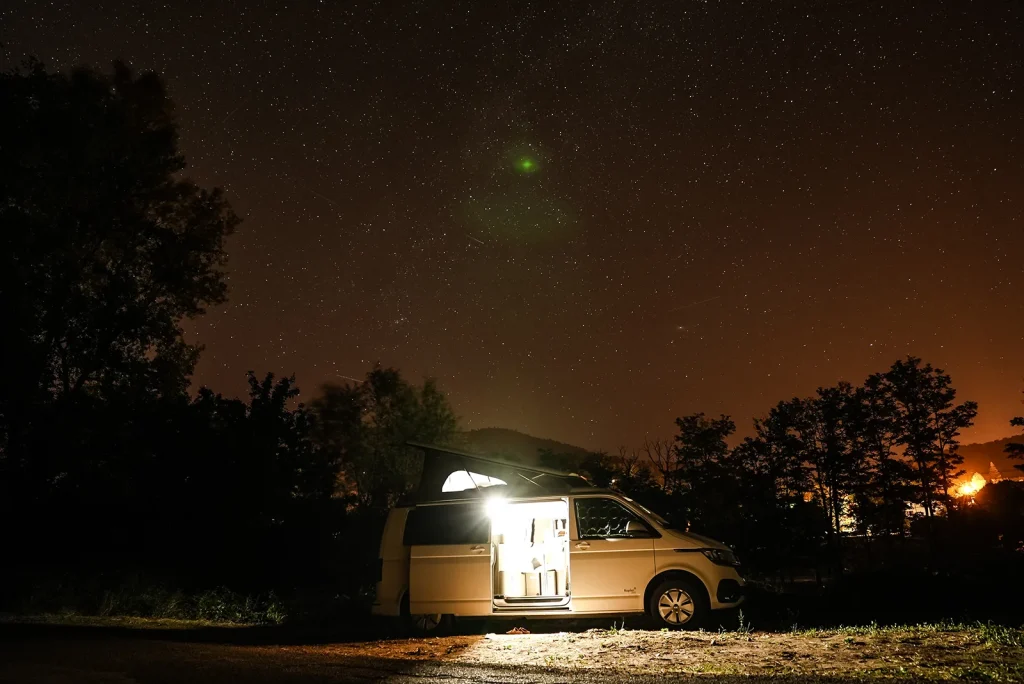

Gamping
A portmanteau of ‘garden’ and ‘camping’, gamping connects landowners who offer travellers the chance to stay overnight on their land. For just a few euros, you can spend the night and perhaps pick up some valuable tips on exploring the region. The Homecamper website lets you explore the pitches on offer – in Lozère, of course!
Dedicated applications
There are plenty of apps to help you find somewhere to stay for the night, both free and paid. Here are a few of them:
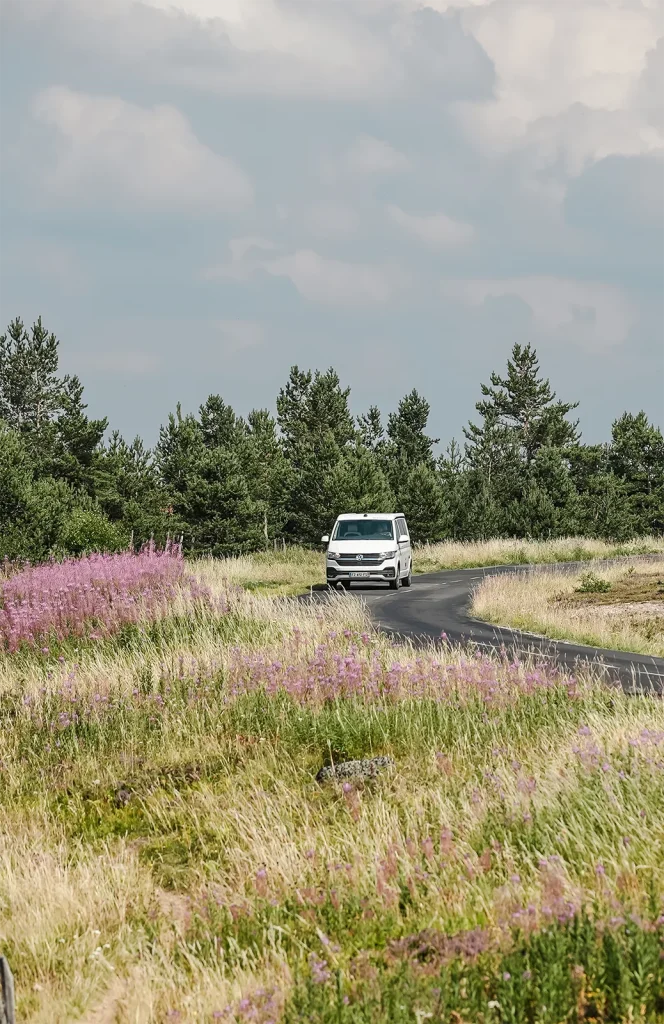
Simple ways to protect the environment
Let us remember that our forests and natural areas are fragile, particularly in Lozère, where woodland accounts for nearly 50 per cent of the department’s total area. We must remain vigilant to protect our environment from fires, which pose a risk to human life, the landscape and the flora and fauna found in our region.
Every year, our natural areas are affected by forest and bush fires. 90 per cent of these fires are caused by humans, half of which are due to carelessness. However, by taking a few simple precautions, it is possible to significantly reduce the risk of a fire starting:
- by not having a barbecue or lighting a fire near vegetation
- by not throwing cigarette ends in the forest, on the ground or out of a car window
- by calling 18, 112 or 114 (the emergency number for deaf and hard-of-hearing people) if you witness a fire
- by taking you to a safe place to stay whilst you wait for help
For further information, please visit the Ministry for Ecological Transition’s website.